Get Full Government Meeting Transcripts, Videos, & Alerts Forever!
Get email alerts on the Capital Plan topic
No spam. Unsubscribe anytime.
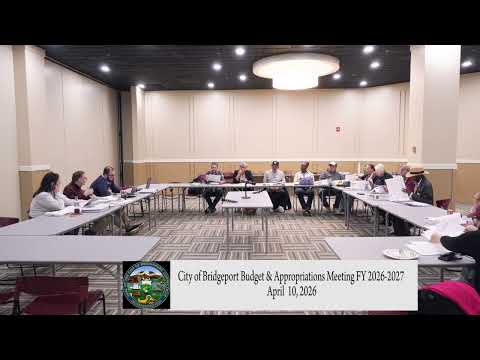
Bridgeport committee reviews five‑year capital plan, debates East End school share and neighborhood priorities
Summary
City staff presented a five‑year capital plan showing roughly $25.3 million proposed to start in the first year and larger out‑year totals; council members and residents pressed for clearer school‑by‑school detail, raised concerns about possible closures tied to a new East End school, and questioned bonding for vehicles and other short‑lived items.
Ken, a city staff member overseeing the capital plan presentation, told the committee the draft is a five‑year blueprint for major mechanical and infrastructure work and that only the projects listed in the first‑year column would be eligible for immediate bonding; he said the first‑year total proposed to begin in the coming year is about $25,280,000 and that out‑year totals include roughly $54,000,000, $41,000,000, $36,000,000 and $21,000,000.
The staff presentation emphasized timing: the committee adopts the plan as a planning document and the city would return in July or August with a bond resolution to authorize financing for the first‑year projects. Ken said the city normally issues 20‑year bonds to finance capital and noted the city currently spends about $90 million a year on debt service — roughly 15% of a $600 million budget — which he described as high compared with an informal nationwide guideline of under 10%. He added the pressure should ease in five to six years as older pension‑related bonds mature.
Council members pressed for more granular backup. "I can get that to the community — it's part of the backup," Ken said when asked which schools would receive specific asbestos, roofing or electrical work, referring to lists George Garcia holds for the school district. Several members and a committee speaker asked that the committee receive school‑by‑school detail rather than districtwide line items before authorizing bonding.
Council member Maria raised a series of concerns about how the East End new‑school proposal is shown in the plan. "I have kids crossing Boston Avenue, one of the most dangerous state roads," Maria said, arguing the plan indicates closures of several existing neighborhood schools (Edison and Beardsley were named in the committee discussion) as part of the East End project and asking how the local reimbursement percentage rose to about 31% from earlier expectations. Ken and other staff said the East End project remains contingent on state enabling legislation and on further board of education process to determine closures; Ken said the district and board of education previously prioritized a special‑education school and that bonding timing and percentages can change as projects are vetted and state rules evolve.
Members also questioned several budgetary choices. Maria opposed bonding short‑lived items, saying, "You should never bond for technology. Technology doesn't last 20 years," and challenged issuing 20‑year debt for patrol cars and speed trailers. Other members pressed staff on how leftover unspent bond proceeds from previous years (staff referenced roughly $1–5 million of prior leftover funds in different places) would be reallocated and asked for a clearer accounting of what is immediately available for district or neighborhood projects.
Public safety and capital‑equipment requests drew discussion: Ken reported a police request of about $500,000 (with a potential ask to raise to $600,000) to fund 8–10 vehicles at approximately $60,000 per vehicle for outfitting, and noted fire department plans for another engine and past purchases of a ladder truck. Committee members and staff discussed national supply‑chain delays for large apparatus and vendors that can slow delivery.
Members sought clarity about the sidewalk and paving programs. Staff said the sidewalk program is going back out to bid and therefore some projects are currently unbonded until procurement completes; the Safe Streets funds were described as leverage for projects such as Trumbull Avenue improvements. On paving, several members said they were told different district allocations (between $600,000 and $700,000 per district) and asked that staff reconcile the apparent discrepancy; staff indicated leftover bonding and other program uses could explain differences and committed to follow up.
Other items discussed included flood control work on the Rooster River (construction delayed by permitting and contractor scheduling), library main‑branch needs (windows and ADA work estimated in the low millions, with staff noting the library recently received additional operating cash), airport budget updates and facilities equipment needs (garbage trucks, loaders), and a potential study for a new senior/veterans facility.
No formal committee vote or final motions on the capital plan were recorded in the transcript excerpt. Committee members asked for follow‑up materials: school‑by‑school backup, a clearer bond and cash‑flow schedule, reconciliation of paving district allocations, and a public summary if the committee adopts the plan so residents understand the major projects and bonding timeline.
The committee scheduled follow‑up briefings from district and facilities staff to answer the outstanding questions and to present detailed backup when the bond resolution is prepared for a future meeting.