Get AI Briefings, Transcripts & Alerts on Local & National Government Meetings — Forever.
U.N. warns of civilian harm in Gaza, sanitation collapse and rising risks to journalists
Summary
U.N. officials told reporters that strikes have hit residential areas and a UN school in Jabalia; four in five sewage pumping stations are out of service, sending roughly 40,000 cubic meters of untreated sewage into areas where displaced families shelter, and the secretary-general highlighted global threats to journalists on World Press Freedom Day.
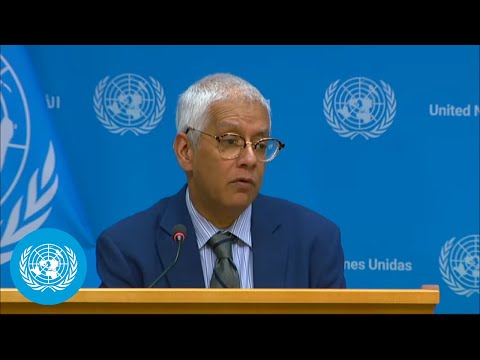
The U.N. press briefing reported continuing violence in Gaza, including strikes and gunfire affecting residential areas and a recent incident at a U.N.-run school in Jabalia where two people were injured, the spokesman said.
Farhan said OCHA (the U.N. Office for the Coordination of Humanitarian Affairs) warned that civilian infrastructure is being hit and called for protections for civilians under international humanitarian law. He highlighted a sanitation emergency: about four in five sewage pumping stations are not functioning, and roughly 40,000 cubic meters of untreated sewage are entering coastal areas daily where displaced families are sheltering. Farhan urged that restrictions on generators and spare parts be lifted so water systems can be repaired and further collapse prevented.
On World Press Freedom Day, the secretary-general’s message was read: Farhan said journalists around the world face censorship, surveillance, legal harassment and targeted killings, and the U.N. has repeatedly drawn attention to deaths of media workers in Israel and Gaza while calling for protection for reporters everywhere.
The briefing included a report that Israeli authorities issued eviction notices in Batn Al Hawa (East Jerusalem) putting more than 40 people — about half children — at risk of imminent displacement; OCHA described recent forced evictions affecting 17 families so far in 2026. The U.N. reiterated calls to protect civilians and ensure humanitarian access.