Get Full Government Meeting Transcripts, Videos, & Alerts Forever!
Get email alerts on the Multimodal Infrastructure topic
No spam. Unsubscribe anytime.
San Mateo commission reviews $28 million plan for protected bike lanes, intersection safety on 19th Avenue
Summary
San Mateo City staff presented final design options for the 19th Avenue–Fashion Island Boulevard multimodal improvements project, citing a $28 million budget funded mostly by grants. The plan would add protected bike lanes, close sidewalk gaps on Seal Slough Bridge and reconfigure the Norfolk intersection to reduce collisions and travel times; the design is scheduled to finish in June and staff will seek remaining construction funds by year-end.
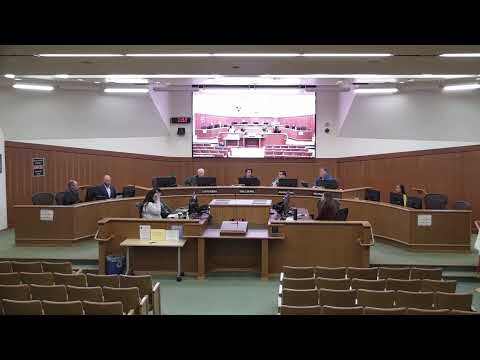
Bethany Lopez, senior engineer in San Mateo City’s public works department, presented the final design for the 19th Avenue–Fashion Island Boulevard multimodal improvements project to the Sustainability and Infrastructure Commission on April 30, outlining protected bike lanes, pedestrian upgrades, intersection reconfiguration and a funding plan that largely relies on grants.
Lopez said the project’s goals are to "provide congestion relief, improve traffic flows," and "improve safety and access for pedestrians and bicyclists," and that staff are seeking the commission’s feedback as design wraps up. She told commissioners the design work began in June and that the team aims to complete design by June, present to city council in mid‑May and obtain a Caltrans permit by August to preserve grant timelines.
Why it matters: staff said the corridor has recorded 80 collisions from 2019 to 2025, with 47 concentrated at the gas‑station/ramps area the plan targets. Lopez said adding protected bike facilities, narrower medians and a new signal phase at Norfolk would separate conflicting movements, protect bicyclists and reduce travel times, while acknowledging some trade‑offs in parking.
Key elements of the plan include a mix of delineators and concrete medians to create protected lanes; a two‑way bike facility on the westerly side to avoid the Delaware ramps and traditional one‑way facilities on the easterly side; a new south‑side pedestrian pathway and a crosswalk at the Norfolk intersection; and reconfigured turn lanes and signal timing intended to reduce eastbound travel times by roughly 23% in the morning and 48% in the afternoon, according to staff traffic analysis.
On parking, Lopez said modifications require shifting lanes and will reduce some on‑street spaces. In one segment between Pacific and Grant, 64 existing spaces would see a net loss of 16 spaces after design adjustments; another underused location would fall from 25 to 11 spaces. Lopez told commissioners staff had not received community complaints focused on parking and that parking ranked low in their survey priorities.
Cost and funding: Lopez said the overall project cost is about $28,000,000. Funding to date includes a small SamTrans planning contribution (reported as $20,000), $3,800,000 in federal funds, and about $21.5 million from the Transportation Authority (including a $16.5 million grant awarded earlier in the year and a recommended $3,000,000 in RM3 funds). The city’s contribution to date is $500,000 (roughly 1.8% of the total), which Lopez said helped leverage the larger grants.
Permits and schedule: Lopez emphasized that much of the corridor is in Caltrans right‑of‑way, requiring a Caltrans permit that staff expect will take about a year; she said the team is roughly eight months into that permitting effort. Staff plan to submit paperwork to secure the remaining $3.8 million in federal construction funds by December; bidding is expected in spring of next year with a contract award in summer if funding and procurement timelines hold.
Traffic, safety and technical trade‑offs: Commissioners pressed staff on technical points. Vice Chair Kranz praised the safety focus and noted the project aligns with federal safety countermeasures and Vision Zero design principles, but asked whether the improvements are merely a redistribution of capacity rather than lane expansion. Lopez replied the project is largely a redistribution—reallocating underused westbound lane capacity to eastbound demand, reworking medians and signal timing—and that some signal and lane reconfigurations provide additional effective capacity without acquiring new private property.
Right‑of‑way and timeline constraints: Kranz asked why adjacent Caltrain property was not used to create additional space. Lopez said pursuing Caltrain right‑of‑way would have required lengthy negotiations and risked missing grant timeline restrictions that underpin the current funding package, so the team prioritized options that preserved the funding schedule.
Community input and detection technology: Lopez described extensive outreach (five community workshops, mailers in English, Spanish and simplified Chinese, pop‑ups and targeted meetings). She said the team has explored detection options for bicyclists at the gas‑station area — including video, radar and microwave detection — and is evaluating flashing signage and conflict striping to increase motorist awareness.
Public comment and next steps: A remote commenter identified as Max voiced support for multimodal and safety priorities but asked why construction phasing prioritized congestion relief. Lopez said some congestion improvements are relatively quick to implement and that doing those early would let subsequent work on bike facilities and signals realize benefits sooner. Following discussion, the commission offered comments and clarifying questions but did not take a formal vote; staff will bring the item to city council and continue design and permitting work.
What’s next: staff will finish design by June, continue Caltrans permitting (target August), and submit the remaining federal funding paperwork by December to move into the construction procurement phase. Commissioners and staff discussed phasing to keep corridor access when possible and to perform disruptive work at night when closures are required.
Quotes (selected): Bethany Lopez said, "we identified that there were 80 collisions in this area," and described the plan to "create a new phase" at the intersection so turning movements can be managed more safely. Vice Chair Kranz said the design "seems compliant with the Federal Highway Administration proven safety countermeasures," and the remote commenter Max asked staff to "reconcile why congestion relief gets priority in the construction order while safety in the multimodal aspects do not."
The commission did not take final action; staff will return to city council with the design package and funding requests as scheduled.