Get AI Briefings, Transcripts & Alerts on Local & National Government Meetings — Forever.
Laredo council authorizes staff to explore legal action after GMA 13 planning decision
Summary
The Laredo City Council voted to direct city management to investigate legal and administrative options — including a possible TRO — in response to an April GMA 13 groundwater planning action that council members said would lock Webb County out of state funding and raise local water costs.
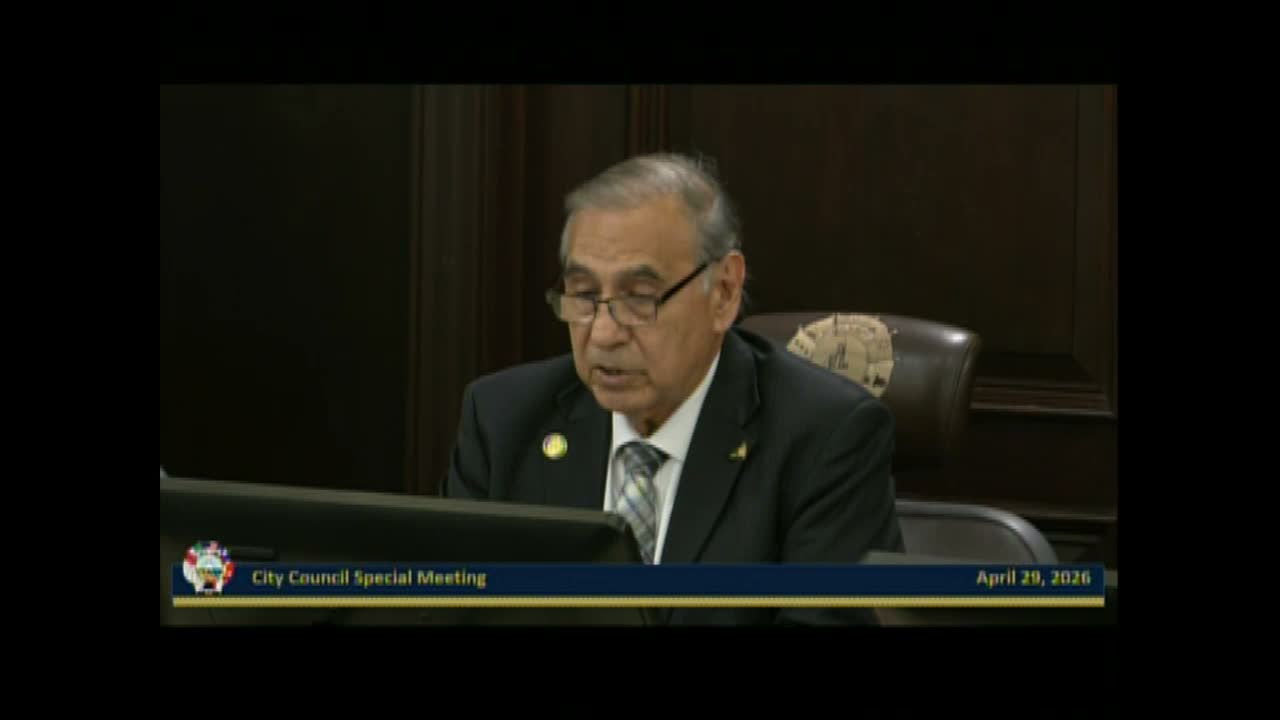
The Laredo City Council voted April 29 to direct city management to pursue legal and administrative options after a Groundwater Management Authority (GMA 13) decision that city officials say reduces Webb County’s recognized groundwater allotment and imperils access to state funding for supplemental water projects.
David Earl, general counsel for Legacy Water Supply Corporation, told the council that the April 22 GMA 13 action changed planning numbers in ways that could prevent Laredo from qualifying for low-cost state grants and financing. "If the number they put on what can be withdrawn within your county is too low, grant money at low-cost state finance become much harder to access or impossible to access," Earl said, arguing the result could make supplemental water "5, 6, 7 times more expensive" for Laredo ratepayers.
Earl and other presenters described a sequence of votes in early April in which Winter Garden Groundwater Conservation District initially agreed to larger allotments and then reversed course, leaving Webb County with a much smaller per-capita planning figure. Earl said the city should make records requests, prepare statutory desired-future-condition challenges under Chapter 36 of the water code, and consider immediate legal relief if funding deadlines or procedural errors threaten the city’s ability to access funds.
State Representative Richard Raymond, who addressed the meeting, urged regional coordination and said that action by the city and county could both force reconsideration of the GMA findings and provide leverage when lawmakers reconvene: "If you decide to move forward ... the city and the county, whatever we discover, it's gonna help us a lot next session in figuring out what's a fair way to move forward," Raymond said.
Hydrogeologists at the meeting emphasized uncertainty in regional models and urged both technical review and political action. Jordan Fernand, a hydrogeologist who has worked on GMA reports, told council members the GMA process favors larger counties that already have representation on the authority and recommended that Webb County seek its own representation in regional groundwater planning.
Council members amended the initial motion to make the contemplated legal action broad — not limited to a TRO — and to include coordination with Webb County and project partners. The council approved the motion by voice vote, with members saying "Aye." The approved direction instructs staff and counsel to evaluate and, if appropriate, pursue legal remedies while also preserving options to keep state funding and regional planning avenues available.
The council’s action is investigatory and does not itself launch litigation; staff said any formal filings, emergency relief or litigation strategy would return to council for approval once legal counsel and administrators complete their review.
The council adjourned after discussing related agenda items, including the status of a separate Legacy Water Supply Corporation project and federal border-infrastructure negotiations.