Get Full Government Meeting Transcripts, Videos, & Alerts Forever!
Get email alerts on the Clean Hydrogen topic
No spam. Unsubscribe anytime.
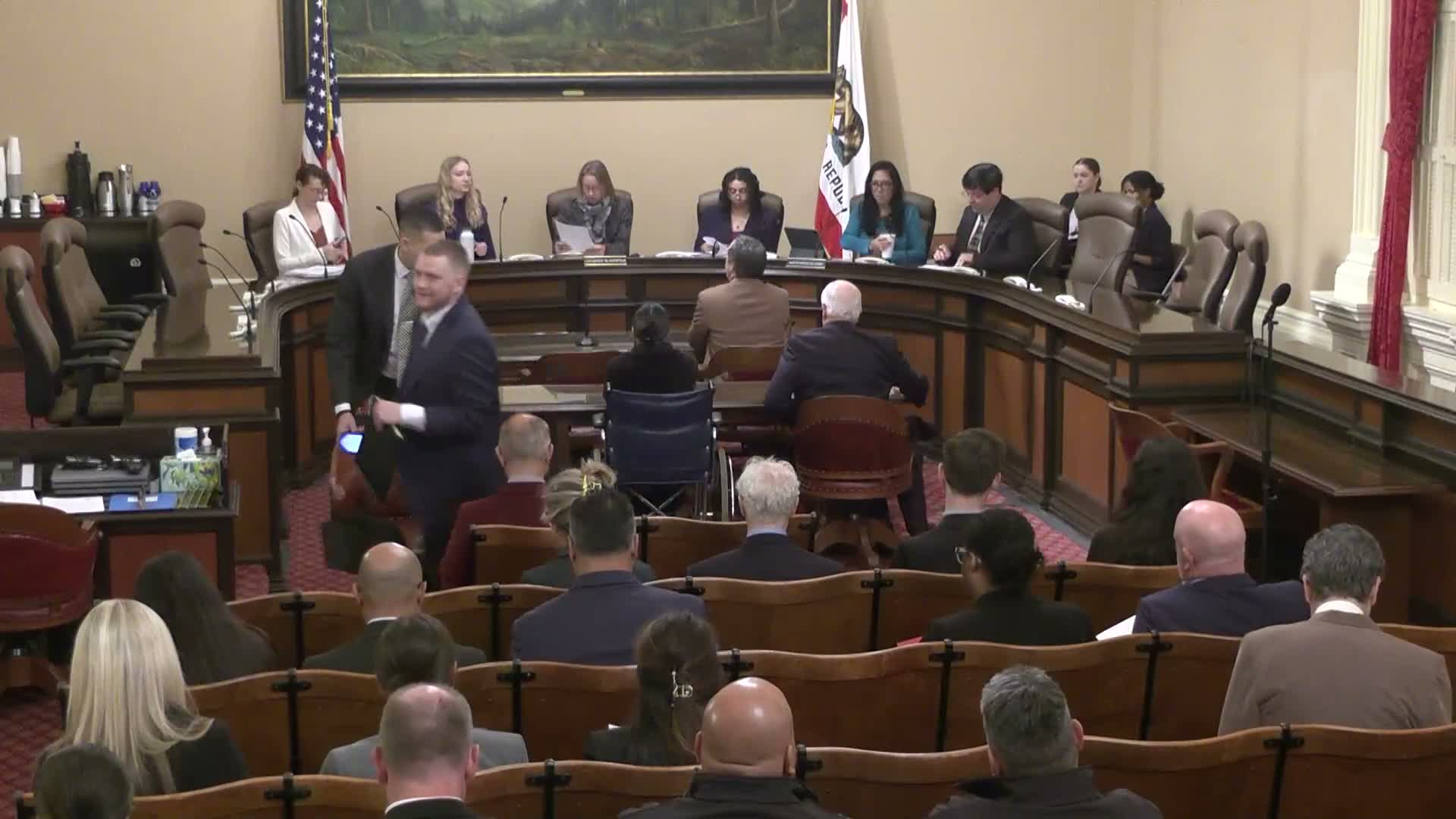
Senate panel advances plan to let turbines get RPS credit when burning green hydrogen, opponents warn of 'resource shuffling'
Summary
Senate subcommittee moved SB 13 50, which would let gas turbines burning qualifying renewable hydrogen receive Renewable Portfolio Standard credit, while opponents pressed the author for stronger protections against resource shuffling, tradable‑attribute abuse and increased NOx emissions.
Senator Scott McNerney introduced SB 13 50, saying the bill would ‘‘stimulate investments in clean hydrogen projects by allowing power plants to get Renewable Portfolio Standard credit when they use green hydrogen to power turbines.’’ He told the Senate Environmental Quality subcommittee the change is intended to spur in‑state green hydrogen development and retain related jobs and manufacturing.
Janice Lin, founder of the Green Hydrogen Coalition, told the panel that renewable hydrogen ‘‘is a carbon‑free fuel that can be produced in large quantities and used to ensure reliability in our power sector’’ and framed the bill as a measured extension of existing guidebook practice. Jeremy Smith of the State Building and Construction Trades Council said the proposal would create construction and maintenance jobs in regions that need them.
Opponents asked for tighter guardrails. Matt Friedman of The Utility Reform Network said the bill ‘‘could allow a massive expansion of hydrogen under the state's Renewable Portfolio Standard program that doesn't include adequate protections against greenwashing, resource shuffling, and increased emissions across the West.’’ Earthjustice and Sierra Club witnesses also warned that allowing gas‑turbine combustion of hydrogen without strict controls could raise NOx emissions in frontline communities.
Committee amendments accepted by the author addressed several of those concerns—asking agencies to analyze and prohibit resource shuffling, banning unbundled renewable energy credits tied to hydrogen claims, and requiring that use of hydrogen ‘‘result in a net decrease of air pollutants and greenhouse gases from the electrical sector.’’ Even so, opposition witnesses said the bill still needs specific additionality and hourly matching requirements to ensure hydrogen drives new renewable generation rather than reassigns existing supply.
The subcommittee recorded a motion to pass the bill as amended to the appropriations committee and kept it on call for later action; members urged continued negotiations between proponents, environmental groups and agencies to tighten definitions and monitoring.
Next steps: committee amendments will be revised and proponents and opponents said they would continue technical talks before the bill reaches the Appropriations Committee.