Get Full Government Meeting Transcripts, Videos, & Alerts Forever!
Get email alerts on the Derby Fashion topic
No spam. Unsubscribe anytime.
Library of Congress panel spotlights Kentucky Derby fashion, millinery craft
Summary
At a Library of Congress 'Threads That Connect Us' program, panelists from the Kentucky Derby Museum and Forme Millinery traced the Derby’s 152‑year fashion tradition, described millinery techniques and materials, and previewed trends and practical advice for first‑time attendees.
The Library of Congress hosted a public program in its "Threads That Connect Us" fashion initiative that turned attention to one of the most enduring public fashions in American life: Kentucky Derby attire. Andrew McCarthy Clark, who organized the series, opened the event and said the initiative—supported by the Ford Foundation—will run through September and includes related programs on May 14, May 21 and July 23.
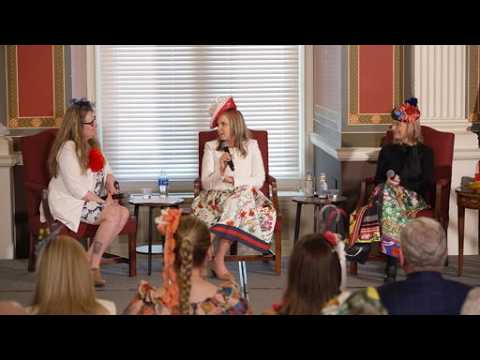
Moderator JJ Harpster, head of the Library’s science section, led a conversation with Katrina Helmer, communications director at the Kentucky Derby Museum, and Ginny Fanestill, founder of Forme Millinery and author of Making a Milliner. The panel addressed how hats and distinctive dress came to define Derby culture and why the tradition endures.
"The Derby is the longest continuously running sporting event in America," Helmer said, placing the fashion tradition in a 152‑year historical context. Helmer described the museum as a nonprofit separate from the racecourse that preserves Derby history and offers a 360‑degree film and rotating exhibits to convey the race’s cultural impact.
Fanestill, who trained in traditional millinery techniques and runs several hat shops, described the craft’s process and materials. "It takes about three or four days to make one hat," she said, explaining the use of vintage hat blocks and materials such as sinamay. She described molding straw and steaming materials over wooden forms and noted that only a small number of hat‑block makers remain.
The discussion traced Derby fashion to the event’s 1875 origins, modeled on European race meets where attendees wore their finest clothes. Panelists said organizers invited women to the track in part to revive failing venues; Helmer said women’s presence reshaped the event into a social and fashion occasion. "If you go to the Kentucky Derby and you don’t have a hat on, you did it wrong," Helmer said, describing the expectation that headwear completes a Derby look.
Panelists also discussed evolutions in style and practice: the rise of fascinators (which Helmer tied to increased familiarity after the wedding of the Duchess of Cambridge), the prominence of white and pink on Oaks and Derby days, and the influence of European and Australian racing styles on clean lines at U.S. tracks. Fanestill noted that modern Derby fashion ranges widely and that the track often sets trends that follow into broader American style.
Museum highlights mentioned during the program included a 1925 Derby trophy from the collection and a time capsule compiled for the 150th Derby, intended to be opened in 50 years. Panelists recounted unusual historical moments—during World War II the infield served as a makeshift camp and mint julep glasses were at times made of plastic because of wartime shortages—and described COVID‑era artifacts such as coordinated mask‑and‑hat ensembles.
The session closed with practical advice for attendees: Fanestill recommended comfortable shoes for the long day and properly fitted headgear; Helmer noted the track still accepts cash for betting and that the base bet remains $2. Audience members asked about encouraging young women in racing and about international influences; the panel emphasized both tradition and change, and the Derby’s ongoing economic and cultural role for Louisville and Kentucky.
The Library of Congress program situates Derby fashion within American history and craft, highlighting the milliners, museum collections and community memories that keep the tradition visible. The Library’s "Threads That Connect Us" schedule includes further events through the summer; the museum and panelists encouraged attendees to view exhibits and related programs for more context.