Get AI Briefings, Transcripts & Alerts on Local & National Government Meetings — Forever.
Springfield SD 186 board hears shortfalls in federal and state education funding
Summary
At its May 4 meeting the Springfield SD 186 board reviewed grant shortfalls, outstanding state reimbursements and capital balances; officials said federal IDEA funding covers far less than the statutory target and the district must cover the gap from local funds.
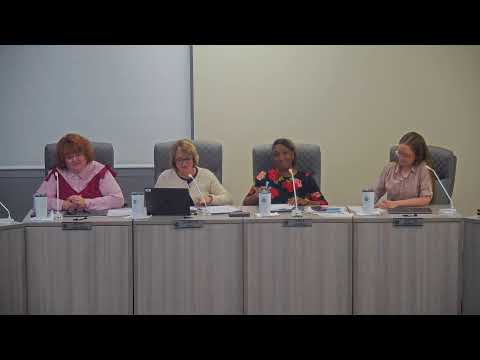
The Springfield School District 186 Board on May 4 heard that several state and federal education grants are not covering program costs, leaving the district to fill gaps from local funds.
"We're coming nowhere close with IDE funding," Miller, who presented the business report, said, describing a $5,100,000 IDEA budgeted line that historically results in federal reimbursement of roughly 10%–15% rather than the 40% statutory target. "That funding has been somewhere between 10–15% for the past 50 years." Miller said the district budgets roughly $15 million for special education teachers and must use local education funds to make up the shortfall.
Miller, the board's business-report presenter, also said outstanding state reimbursements as of April 27 totaled $483,622.48 and noted food-service disbursements of $9.3 million last year. He told the board the early childhood block grant remains budgeted at $4.7 million, a figure that has not increased in about seven years despite rising costs.
The business report reviewed capital-project balances as well: an investment beginning balance of $53,603,481.59, bond draws and expenses of $3,458,012.91 and an ending balance shown at $50,414,488.37. Miller said the district received $1.6 million in sales-tax receipts for March and maintained about $10.2 million in a CFST savings account; two upcoming bond draws are scheduled in June and December that will reduce balances.
Board members pressed for clarity about how proportionate-share rules affect parochial schools; Miller explained that, for programs such as Title I, the district must allocate a proportional share to eligible parochial schools and that the amounts fluctuate with overall federal allocations.
Why it matters: The shortfalls and stagnant grant levels shift recurring program costs onto the district's locally controlled funds, which affects budgeting choices for staffing, early childhood programming and capital maintenance. Miller reminded the board that the amended budget will be on the next meeting's consent agenda for approval.
What happens next: The board was invited to submit questions about the amended budget ahead of the next meeting so staff can provide additional detail when the board votes on the amended budget.