Get Full Government Meeting Transcripts, Videos, & Alerts Forever!
Get email alerts on the Annexation topic
No spam. Unsubscribe anytime.
Enumclaw council opens review of two annexation petitions, asks staff to prepare resolutions and consult city attorney
Summary
Staff presented two annexation requests (one east near the Roosevelt roundabout; one west near the Expo/Fairgrounds). Staff suggested modifying boundaries to include additional parcels (combined ~38 acres, valuation about $8.5 million); council directed staff to consult the city attorney, consider running two separate resolutions, and consider requiring appellants to pay consultant costs.
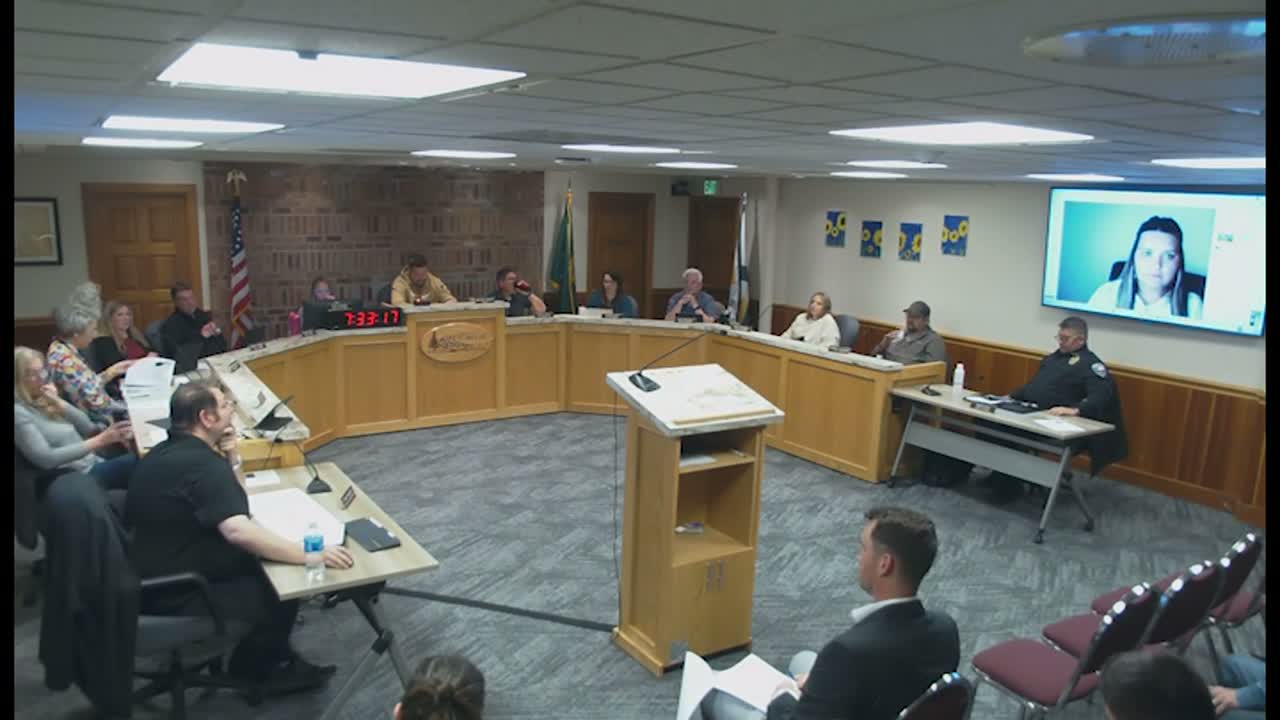
City staff briefed the Enumclaw City Council on April 27 about two annexation petitions submitted in March and reviewed options for processing the requests.
Community development staff explained the petition process under state law: a legislative body must set a meeting date within 60 days of a filing to decide whether to accept, reject or modify an annexation notice. Staff described two proposed areas — one on the west side adjacent to the Roosevelt roundabout and one on the east side near the fairgrounds/Expo Center — that together include five initially-noted parcels (about 18 acres). Staff recommended modifying the proposed areas to add parcels so the city boundary would be more regular; with additional parcels the combined area would be roughly 38 acres with an assessed valuation of about $8.5 million.
Staff advised that the common annexation method is a 60% petition, meaning petitioners must secure signatures representing 60% of the total valuation of the area to move forward. Staff told council that some parcels in the Tarragon proposal would not alone constitute the 60% valuation and would require additional signatures from other property owners.
Councilmembers debated processing the petitions together or separately. Community Economic Development committee members recommended running the two applications separately to preserve equity for individual parcel owners and to avoid packaging properties in distant locations. One council member asked staff and the city attorney whether it would be possible to require appellants to pay for a city consultant to handle annexation work, citing limited staff bandwidth.
Staff said they would consult with the city attorney about quasi-judicial communication limits and return with options. Council gave staff head nods and direction to prepare resolutions (likely two separate resolutions) reflecting the staff recommendations and to follow up with legal advice. No formal vote on an annexation ordinance was taken at the meeting.