Get Full Government Meeting Transcripts, Videos, & Alerts Forever!
Get email alerts on the Community Planning topic
No spam. Unsubscribe anytime.
Springfield 2051 organizers report 1,572 survey responses, outline seven strategic pillars
Summary
Organizers of the Springfield 2051 initiative told the Springfield City Commission that the resident-led planning effort has gathered 1,572 survey responses, run more than 1,000 engagement-session participants and identified seven strategic pillars; presenters said broad community ownership and partnerships will be necessary for implementation.
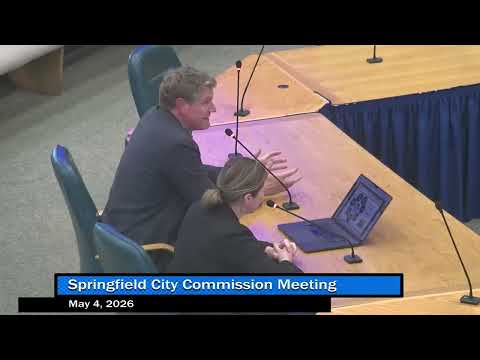
At a Springfield City Commission work session, presenters Marta Wojcick and Kevin Rose reported that the Springfield 2051 community-planning effort has collected 1,572 completed, in-depth surveys and held over 1,000 participants in listening and visioning sessions.
The presenters said the effort — aimed at guiding both short-term actions and longer-term direction ahead of Springfield's 250th anniversary — yielded seven strategic pillars to shape an implementation plan. "We reached 1,572 community survey results," Wojcick said, thanking residents for taking time to provide detailed feedback.
The seven pillars the team identified are: fostering strong neighborhoods and community well-being; creating youth opportunities; activating South Side revitalization; elevating arts, heritage and culture; capitalizing on recreation and natural assets; enhancing downtown and corridors; and stimulating strategic economic growth. "What we want is we wanna be unique," Kevin Rose said, urging that the pillars should leverage Springfield's distinct position in the region.
Rose told commissioners the survey instrument took about 20 minutes and produced high-quality data points, supplemented by listening and visioning sessions across the city and nearby county communities. He said early survey returns showed a higher share of negative responses, but over time the proportion of residents expressing optimism and support for change increased; the consultant provided anonymized data summaries to the project team.
Both presenters stressed the project's governance model. "This is a nongovernmental project," Rose said. "This is not something that is led by the city. It's not being led by the county. It's not being led by the chamber." He added that the city has provided some funding but that broad ownership from city and county leaders, nonprofits, foundations and residents will be necessary to move from planning to implementation.
Wojcick described the next steps: pillar-specific sessions to shape implementation plans, a series of town halls and a podcast series recorded in Springfield (nine episodes so far) to keep residents informed. "Let's make history together," she said, pointing listeners to springfield2051.com and the podcast feed for more information.
A commissioner asked when the team would know the initiative has succeeded and requested measurable outcomes. Wojcick replied that community engagement levels and sustained partner involvement are primary success measures and that the implementation plan will translate the pillars into tangible projects, some achievable quickly and others expected to take longer.
The commission adjourned after the presentation. During the roll call, the commission recorded affirmative responses from the names read as "Mister Ricketts," "Mister Rigsby," "Missus Tackett" and "Mister Roo."