Get Full Government Meeting Transcripts, Videos, & Alerts Forever!
Get email alerts on the Wastewater Regionalization topic
No spam. Unsubscribe anytime.
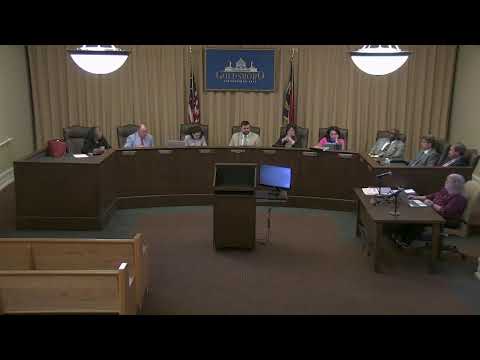
Goldsboro council backs city-led approach for regional wastewater merger study
Summary
After months of workshops and a state-funded feasibility study, the Goldsboro City Council directed staff to pursue a city-led merger framework (Option B) for regional wastewater services, citing control over borrowing power and concern about governance equity under a standalone authority.
Goldsboro's City Council on Tuesday directed city staff to continue developing a city-led approach to regionalize wastewater services across greater Wayne County, choosing a merger framework the city said preserves local control and borrowing flexibility.
The decision followed a presentation by consultant Reid Barton and a three-year study funded in part by state regionalization grants (MRF). Barton summarized two finalist frameworks: Option A, which would form a new regional authority with representation weighted among participating jurisdictions, and Option B, which would consolidate other systems under Goldsboro's existing infrastructure and create an advisory regional board. "If we do this together, the system was already somewhat in place," Barton said, urging council to consider the economic and operational benefits of regional cooperation.
City Manager Mister Livingston framed the core trade-off as control versus shared governance: smaller towns favored an authority where each jurisdiction had representation on a final-deciding board, while Goldsboro officials said vesting final decision-making in a new authority could leave the city that contributes the most assets and flow with limited control. "We have about 8,000,000 gallon a day flow into our treatment plant," Livingston said, noting Goldsboro accounts for the majority of system capacity and argued the city's utility fund and asset base give it greater borrowing power to finance needed upgrades.
Council members debated governance, debt collateralization, and the political optics of creating an additional governing body. One council member who moved the staff direction stressed the economic-development benefits of regionalization: "Today, it's about economic development, and my motion would be that we accept and adopt option B as our preferred method to move forward with this discussion," the member said, urging a path that would make neighboring utilities more viable and attract industry.
Reid Barton told the council the final workshop produced no unanimous consensus: Fremont, Pikeville and Wayne County had signaled support for Option A in a nonbinding read, Goldsboro opposed it, and two towns abstained. Barton also reported there was roughly $90,000 remaining in the state MRF grant and that the city could ask DEQ to use the remainder to advance the city-led option if requested.
After brief additional discussion and no further amendments, the council voted to direct the city manager and staff to proceed with Option B, instructing them to continue legal drafting, interlocal negotiations, and grant coordination. The transcript records the motion, second and adoption of Option B but does not list a roll-call tally for that vote in the meeting record.
The council emphasized the voluntary nature of the process for neighboring towns and the need for clear legal frameworks and advisory representation for partner municipalities. Officials said next steps include drafting agreements, seeking state approval to apply remaining grant funds to a city-led path if required, and following up with individual partner jurisdictions to secure verbal direction from their governing boards.