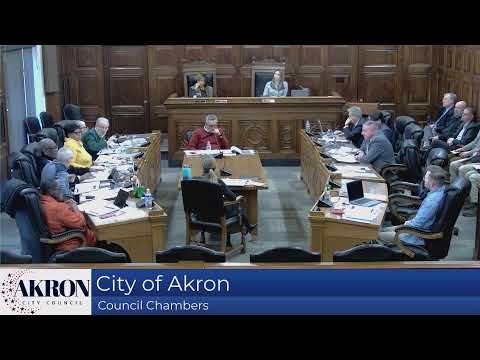
Public Works details mobile work orders, sewer progress and water-line replacements
Summary
Public works outlined plans to expand mobile field work order tools, optimize leaf and snow routes, finalize the north-side interceptor tunnel, and replace thousands of galvanized private service lines under a funded program.
Public works and utilities staff told council they are investing in field technology and large infrastructure projects to reduce overflows, improve response times and address lead-service risks.
Director (public service) staff described a phased roll-out of mobile work-order devices already mounted on sanitation trucks and cameras that geolocate problems detected in the field. The department plans to expand the devices to highway and motor-equipment divisions to reduce paperwork and speed repairs.
Sewer staff reported progress on the consent-decree work and said long stretches without overflows are helping the city avoid construction of an expensive high-rate treatment facility. The north-side interceptor tunnel build is expected to be operational by the end of the calendar year, though work near Peek Road will continue because of ongoing gorge-dam-removal sediment management.
Water staff outlined a program to remove about 4,500 galvanized private-service lines (the homeowner's historical responsibility) and replace them with copper at no cost to affected homeowners using grant and principal-forgiveness funding; staff said the program includes roughly 53% principal forgiveness and that the city expects to replace the remaining lines by 2027. Staff emphasized they have no occupied homes currently served by lead service lines and are identifying remaining unknown materials in street-to-lawn areas.
Operational metrics described at the hearing included about 78,000 tons of solid-waste processed in 2025, improved recycling contamination rates, a sharp increase in salt usage during an extreme winter (about 38,000 tons used in 2025 versus 24,000 in the prior reported year), and roughly 403 water-main repairs reported for 2025.
Why it matters: The mobile-work-order expansion and GIS asset updates aim to speed resident service requests, while sewer and water capital work address public-health and environmental compliance and reduce long-term treatment liabilities.
What's next: Staff will continue consent-decree work, bring a water-bureau master plan and critical-customer plan forward, and proceed with the galvanized-service-line replacement program under current funding.
AI generated
The text on this page is AI generated. Summaries, highlights, analysis, and video transcripts are all produced from the original source material.
AI can make mistakes, so if you spot one, and we will fix it for everyone.
Note: the source content is unaltered by us. Any content source we link to, be it a video, an audio recording, or a document, is presented exactly as its publisher released it. That publisher is usually a government body, sometimes an individual official or another organisation.