Get Full Government Meeting Transcripts, Videos, & Alerts Forever!
Get email alerts on the Education Equity topic
No spam. Unsubscribe anytime.
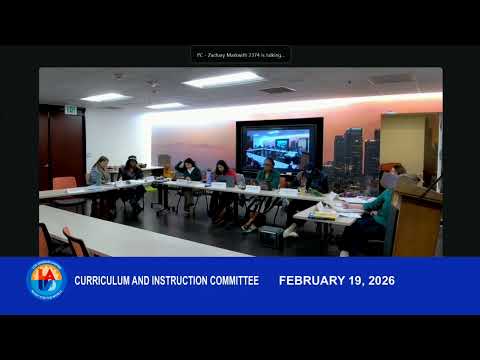
LAUSD committee hears calls for prayer spaces, paid PD and more curriculum to uplift Black and Muslim students
Summary
Teachers, students and district staff told the LAUSD Curriculum & Instruction Committee that schools should scale culturally affirming practices: district Ramadan guidance, centralized lesson resources, dedicated prayer spaces, paid professional development and mental‑health supports tailored to Black and Muslim students.
The Los Angeles Unified School District Curriculum & Instruction Committee spent much of its meeting hearing teachers, students and mental‑health staff describe how schools can better reflect and support Black and Muslim identity.
Board member Carla Grigo, who chairs the committee, opened the session by asking a central question: “How do we uplift Black and Muslim identity, history and joy in schools and classrooms?” She urged the group to center student voices and adult self‑awareness as the starting point for change.
Teachers and students gave concrete examples: Nia Henry, a teacher at Dorsy High School, described classroom practices that make students visible — daily check‑ins, community circles, student art displays, playlists and project work — and urged district support so those practices can be widely adopted. “I have about 155 students and 95% of them identify as Black or Latinx,” Henry said, noting barriers such as insufficient classroom copies, websites blocked on LAUSD Wi‑Fi and optional online PD that had no accountability.
Rayhan Khan, a fifth‑grade teacher at Porter Ranch Community School, recommended three straightforward district actions: an annual district Ramadan notification to principals with dates and a brief explanation; centralized, standards‑aligned Ramadan and Muslim‑American resources for teachers; and earlier advance planning so schools can prepare for Ramadan’s shifting calendar. Khan said a designated prayer space at her site reduced confusion and helped students focus.
Students described how Muslim Student Associations and campus prayer spaces changed school climate. Tala Sultan, a senior at UCLA Community School, said an MSA provided peer mentorship and “a space where Muslim students could pray, gather, and feel included without having to explain or defend their own identity.” Samir, another senior, told the committee: “Asking for a prayer space is not political.”
Mental‑health staff and advisers urged culturally responsive supports. Fiaz Zuber Sayed, a psychiatric social worker, and Jordan LeBlanc, a regional mental‑health adviser, described how misinformation and absence of representation produce anxiety and stigma. LeBlanc highlighted district materials — an “Uplifting Black Students” resource guide, multi‑tiered interventions and an experiential professional development to address use of the N‑word — and recommended culturally affirming wellness spaces on every campus.
Kylie Jackson, the district’s history–social science coordinator, said instruction about Islam appears in California’s framework (commonly in grade seven world history standards) and that the district has partner lessons and professional development that teachers can use. She emphasized that academic instruction about religion must be non‑devotional.
Committee members pressed staff on how to make training and resources mandatory rather than optional, how to orient new teachers at onboarding, and how to ensure site leaders turn district guidance into actual practice. Staff said materials exist but emphasized the need for systemic adoption, site leadership, and expanded mental‑health and adviser capacity at schools with small Muslim or Black student populations.
Public commenters — students, parents and community groups including CAIR and the Intercultural Networks Group — urged the committee to institutionalize the changes: guaranteed prayer space access, standardized Ramadan notices and links to ready‑to‑use lesson materials, partnerships with vetted community providers for classroom content and mandatory staff training on cultural competency and anti‑bias intervention.
The committee did not take formal votes. Grigo said the discussion will inform recommendations to the division of instruction and that the committee expects to continue the conversation at a future meeting.