Get Full Government Meeting Transcripts, Videos, & Alerts Forever!
Get email alerts on the Land Use topic
No spam. Unsubscribe anytime.
Residents urge Rosemount to pause data‑center approvals amid water, transparency and infrastructure concerns
Summary
More than a dozen residents and regional advocates pressed the council for a temporary moratorium and stronger disclosure on hyperscale data centers, citing water‑use estimates, aquifer vulnerability and non‑disclosure agreements. Staff said no new applications are active and described an existing capacity agreement.
Dozens of residents and outside experts told the Rosemount City Council on April 7 they want a pause on new hyperscale data‑center approvals, saying the projects pose potential long‑term risks to water supplies, electricity infrastructure and community character.
At length during the public comment period, speakers asked the council to enact a moratorium, require an environmental impact study, and make development agreements more transparent. Brian Dawson, who addressed the council early in the session, asked for a temporary moratorium and said the scale of proposed data‑center water use requires careful study. “I’m asking for a moratorium,” Dawson said. “Let’s see what Project Bigfoot does. Let’s see what they actually use.”
Several speakers cited studies and recent nearby proposals (including Farmington) and said a single hyperscale site can consume river or aquifer resources comparable to hundreds of households or multiple commercial users on busy corridors. A number of residents also linked ongoing local water quality questions—recent elevated gross alpha, PFAS and manganese levels in some wells—to a rationale for slowing approvals until technical and regulatory questions are resolved.
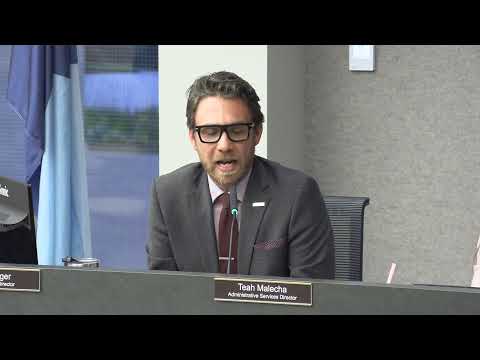
City staff responded during the meeting that the city currently has no active applications for new data centers in Rosemount and reiterated that prior non‑disclosure agreements existed but have expired for one company; staff also described a capacity agreement with a Meta site that sets a maximum supply capacity of up to 100,000 gallons per day and an average daily expectation in the 25,000–40,000 gallon range. Staff said that maximum was a capacity guarantee (the city agreed it could supply up to that amount), not necessarily a day‑to‑day consumption number.
Technical speakers in the public gallery urged council to require reporting and enforceable operational conditions so the public and regulators can track actual daily use, what is discharged in closed‑loop cooling blowdown, and how costs for additional treatment would be apportioned. Telecommunication and infrastructure experts warned that while modern designs can reduce water use, the electricity needed to run advanced cooling systems has its own water implications at power plants and could shift impacts geographically.
Council members did not adopt a moratorium or new regulation at the April 7 meeting. They did, however, hear multiple requests that the city explore stronger reporting requirements, transparent contract terms and closer coordination with state agencies. City staff said they would continue to respond to individual data requests and coordinate with state partners on impacts and regulatory questions.
The public comment record on April 7 included organized neighborhood and regional coalition voices urging a pause and more public review, while other speakers questioned broad claims about job creation and argued that infrastructure investments from developers can be beneficial if properly conditioned.