Get Full Government Meeting Transcripts, Videos, & Alerts Forever!
Get email alerts on the Supportive Housing topic
No spam. Unsubscribe anytime.
Regional supportive‑housing planning advances as state funds and pipeline projects align, CSH tells CHAB
Summary
Brooke Page (Corporation for Supportive Housing) said supportive housing is a regional priority, cited Nevada legislative funding (Assembly Bill 310 and subsequent allocations) and described a growing pipeline of permanent supportive housing and shared regional processes for tenant selection and funding alignment.
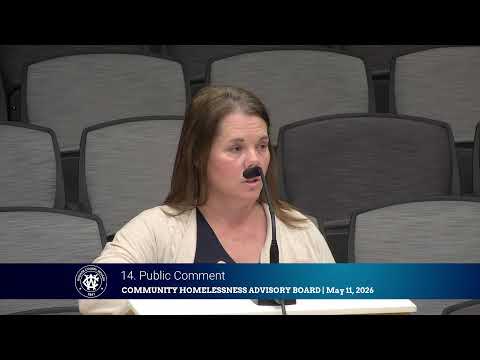
Brooke Page, managing director with the Corporation for Supportive Housing, told the Community Homeless Advisory Board that the region is moving from planning to implementation on supportive housing. She said the community is aligning on a shared definition of supportive housing, setting quality standards and prioritizing people with the highest complex needs.
Page cited the state’s supportive‑housing development funding created by Assembly Bill 310 and subsequent appropriations as key levers for capital development. She said jurisdictions are working to align funding and referral pathways to avoid duplicative, project‑by‑project approaches and to prioritize outcomes and tenant selection criteria that serve those least likely to exit homelessness without intensive supports.
Page said the Northern Nevada Continuum of Care and jurisdictional partners are formalizing a regional process so funding announcements, quality standards and tenant prioritization can be coordinated. Board members expressed interest in a unified legislative message to the state for additional capital and operating supports; Page said data and regional coordination strengthen that advocacy.
Page emphasized that supportive housing requires lower client‑to‑staff ratios, wraparound services, and sustained funding for case management and operations, not just capital construction. She described the action plan as an implementation roadmap rather than a planning document and paused for questions from board members.