Get Full Government Meeting Transcripts, Videos, & Alerts Forever!
Get email alerts on the CARES Campus topic
No spam. Unsubscribe anytime.
Church coalition proposal for CARES campus sparks sharp public debate at CHAB meeting
Summary
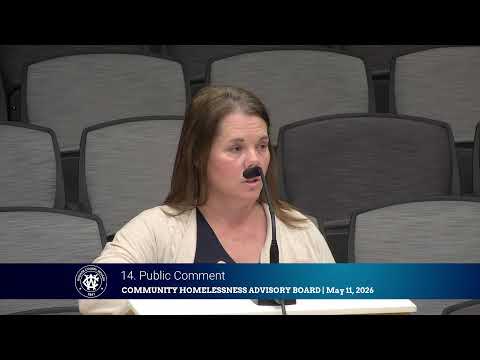
Paul White of Education Crusade urged Washoe County to cancel CARES contracts and deed the campus to a church coalition that would enforce sobriety and drug testing; public commenters were sharply divided, with some citing personal recoveries at CARES and others alleging program failure and out‑of‑area inflows.
Paul White, representing Education Crusade, told the Community Homeless Advisory Board that commissioners should cancel CARES contractors’ contracts and federal grants that he said prevent enforcement, then transfer CARES property to a nonprofit coalition of local churches to run a stricter, faith‑based program.
White said his coalition would impose sobriety, regular drug testing, limits on unsupervised leave, mandatory life‑skills classes and a maximum stay. He claimed CARES had produced “no genuine success story” in six years and argued the current model enables violence, theft and drug use. “Our program’s basic guidelines would include results, not excuses,” White said.
The presentation drew robust public comment and pushback. Several speakers who said they had benefited from CARES urged caution. Lawrence Dawson, who identified himself as a founding member of ABLE and said CARES “saved my life,” asked board members to preserve what is working and to include people with lived experience in decisions. “Don’t let the noise drown out what’s actually working,” he said.
Other commenters supported White’s approach. Pastor Phil McKay and Pastor Pepe Gonzalez described church‑run recovery programs and offered to partner with county leaders on alternatives. Several public speakers repeated unverified claims that buses had brought out‑of‑state individuals to the area and that the program had cost hundreds of millions of dollars; those claims were advanced by commenters and not established by staff during the meeting.
Board members did not vote on White’s proposal. Mayor Ed Lawson asked White to follow up with more detail after White projected rapid reductions in visible homelessness under the church model; White invited further discussion.
The session included sharp allegations from White that county staff and some CARES employees had withheld negative information and engaged in misconduct, including a claim that staff sold fentanyl to clients. Those allegations were presented as the speaker’s assertions; county leaders and CARES operators did not substantively address each claim during the meeting.
Chair Clark and other board members acknowledged the urgency of improving outcomes but did not endorse turning CARES over to a private coalition. Instead the board continued through its agenda and directed staff to return with more information on membership and operations items discussed later in the meeting.
The board’s next procedural step is to have staff present options on several agenda items at a future meeting; any change in CARES governance, contracts, or grant usage would require legal review and action by multiple jurisdictions.