Get Full Government Meeting Transcripts, Videos, & Alerts Forever!
Get email alerts on the Superintendent Evaluation topic
No spam. Unsubscribe anytime.
South Bend district reviews new superintendent evaluation framework focused on measurable outcomes
Summary
At an April 15 policy work session, the South Bend Community School Corp. reviewed a new superintendent evaluation framework designed to tie performance to measurable domains (instructional leadership, human capital, operations, culture) and to align with ISBA and IAPSS best practices; the board did not vote and will hold a first reading later.
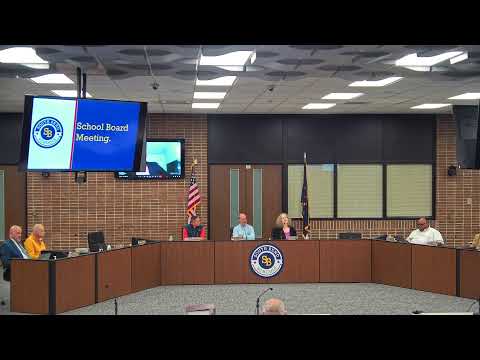
Matt Lawson, the district's general counsel, presented a new superintendent evaluation framework the board reviewed at its April 15 policy work session at the SBCSC administration building. "The framework is established to provide formal objective and structural processes for evaluating the superintendent," Lawson said, adding the approach "moves away from a subjective evaluation and toward measurable performance aligned with student outcomes and board priorities."
The proposal organizes evaluation around defined domains — instructional leadership, human capital, operations and culture — and applies a consistent rating scale. Lawson said the framework aligns with the Indiana School Boards Association (ISBA) and IAPSS best practices and is intended to give the board a defensible, consistent process. "This is ultimately about accountability, clarity and aligning leadership performance with student results," he said.
Board members discussed the document's principles and performance indicators. Members requested an explicit principle requiring the superintendent to provide regular updates documenting progress toward established priorities; Lawson said the board split a previously combined principle into separate principles to emphasize that reporting requirement. The packet also lists performance indicators the board and superintendent agreed could include equitable access to programs, equitable treatment of students, reductions in discipline disparities, maintenance of a balanced budget, building safety and reliability of transportation services. Board member Mr. Ellison urged adding community engagement as an emphasized indicator and Lawson said that suggestion had been incorporated.
No vote was taken. Counsel and board members clarified that the meeting was a review rather than a first reading; Lawson recommended scheduling a formal first reading in late April or early May after a small number of revisions are made. "We're not voting on it today," a board member said during the meeting. The next procedural step is a first reading on a future board agenda, during which members may propose amendments and the public can provide input.