Get email alerts on the Solid Waste topic
No spam. Unsubscribe anytime.
Multnomah County briefing flags a spike in solid waste; staff plans data fixes and a pilot
Summary
Staff told the Multnomah County board that operational solid waste was 50% higher than a fiscal‑year 10 baseline and diversion held at 48%; presenters said a pickup‑based counting method inflated recent numbers and proposed a camera pilot and further engagement to improve diversion.
During the resource conservation briefing, county staff reported troubling solid‑waste trends for county operations and laid out steps to improve data quality and diversion.
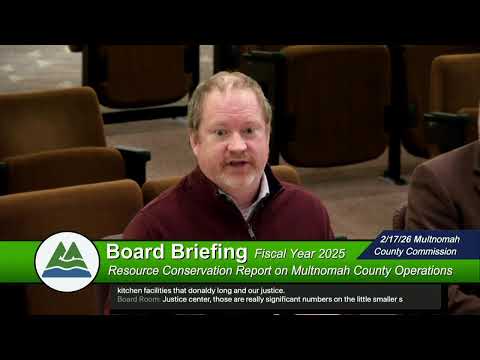
Tim Lynch said the county generated 50% more solid waste in fiscal year 25 than the fiscal‑year 10 baseline and that the current diversion rate is about 48% (the percentage of waste not sent to landfill). Staff told the board a 2023 change in tracking methodology — moving toward a pickup‑based count that can overstate generation when haulers make scheduled pickups even if a container is not full — is a main reason some recent numbers appear higher than expected.
Jeff Lewis said the county counts shredding in its waste streams and that shredded material is reused (pulped) rather than recycled as whole fibers. He added that some county sites (for example, facilities with kitchens such as the Donny Long and the justice center) have found composting to be practical and that improved signage and employee engagement can increase correct diversion.
To address monitoring challenges, staff said they are piloting a third‑party monitoring company that would install cameras at some dropboxes so the county can size pickups by actual fill levels rather than scheduled frequency. Lewis said procurement and vendor onboarding have created some delays and that staff may ask the board’s office for help in moving the pilot forward.
Commissioner Jen Sixon pressed staff on the methodology and whether shredding is counted as recycled; staff confirmed shredding is included in the county’s diversion counts but noted it is less valuable than whole‑fiber recycling. Staff said they will return with recommended actions and more specific proposals if the board signals it wants to prioritize solid‑waste work.
AI generated
The text on this page is AI generated. Summaries, highlights, analysis, and video transcripts are all produced from the original source material.
AI can make mistakes, so if you spot one, and we will fix it for everyone.
Note: the source content is unaltered by us. Any content source we link to, be it a video, an audio recording, or a document, is presented exactly as its publisher released it. That publisher is usually a government body, sometimes an individual official or another organisation.