Get Full Government Meeting Transcripts, Videos, & Alerts Forever!
Get email alerts on the Land Use Annexation topic
No spam. Unsubscribe anytime.
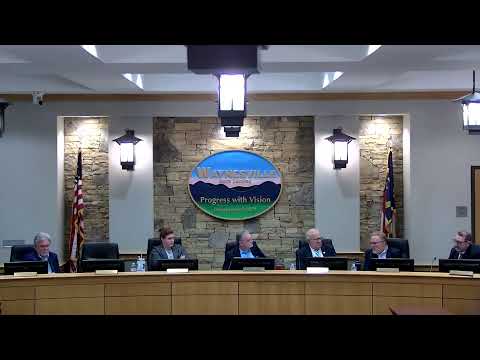
Waynesville council approves annexation of western portion of Velwood Farm phase two after lengthy public hearing
Summary
After a public hearing with more than a dozen speakers, the Town of Waynesville council approved annexing the western portion of a parcel at 192 Redcliffe Cove Road into town limits to allow the continuation of the Velwood Farm subdivision (phase two). Residents raised concerns about farmland loss, runoff, traffic and housing affordability.
The Town of Waynesville council voted to annex the western portion of a parcel at 192 Redcliffe Cove Road, moving the land from the town's extraterritorial jurisdiction into the town for inclusion in Velwood Farm subdivision phase two.
Olga Groomman, an assistant in development services, told the council the petition for annexation applies to the western portion of the property and that phase two is proposed to include 148 single‑family lots; the planning board approved the site plan on Feb. 19, 2026. Groomman said the exact acreage of the annexed portion was not specified on the agenda notice but that a legal description is provided on the applicant's plat. She added the property lies inside the town's urban‑services boundary and that the developer plans to dedicate water and sewer infrastructure to the town once built.
Why it matters: Annexation brings the parcel under town zoning and municipal services and commits the town to the long‑term maintenance obligations that come with providing water, sewer and public services to the newly incorporated area.
Residents spoke for nearly an hour. Trey Balance, a local general contractor who said he lives outside town limits, accused the developer of using nonlocal firms and of displacing local trades, saying, "They're not hiring our local electricians, plumbers, or carpenters. They're not buying from our local suppliers." Several farmers and preservation advocates — including Marsha (Martha) Mills, chair of the Haywood County Farmland Preservation group — warned that the development would reduce farmland, harm water quality in Raccoon Creek and downstream waterways, and strain schools and the local hospital.
Patrick Bradshaw, an authorized representative for the applicant and a civil‑design consultant, described civic space plans (about 9.85 acres, including wetlands that are not developable), greenway connections, and traffic accommodations coordinated with the state Department of Transportation. He said the developer will pay up‑front costs for sewer and water extensions and that those systems are typically dedicated to and accepted by the town after construction and certification.
Council debate focused on three recurring themes: who benefits from the housing being produced, whether the subdivision's scale and design reflect the town's stated land‑use goals, and the long‑term fiscal obligations the town assumes via annexation. A councilor noted that earlier phases have sold at median prices that appear higher than town median incomes, a point used to question whether the project advances affordability goals.
A councilor moved to annex the property; the motion was seconded and carried on a voice vote. The audible record shows in‑room voices in favor and some opposition during the roll call, but a precise roll‑call tally did not appear in the spoken record.
What happens next: Annexation does not itself approve building permits or final plat recordings; the developer must still secure required permits, complete off‑site and on‑site infrastructure to town standards, and coordinate any outstanding state permits for roadway encroachments or stormwater. Staff said the town will request any missing narrative documents from the applicant before submitting required materials to state agencies.
— Quotes in this article are taken verbatim from the public hearing transcript and attributed to speakers who identified themselves in the record.