Get Full Government Meeting Transcripts, Videos, & Alerts Forever!
Get email alerts on the Capital Planning topic
No spam. Unsubscribe anytime.
Neptune Beach council reviews broker estimates as a starting point for possible city‑hall relocation
Summary
Councilors reviewed broker price ranges for City Hall and the police station as preliminary data to decide whether to pursue relocation; members said the numbers show a wide range and stressed caution before hiring outside consultants.
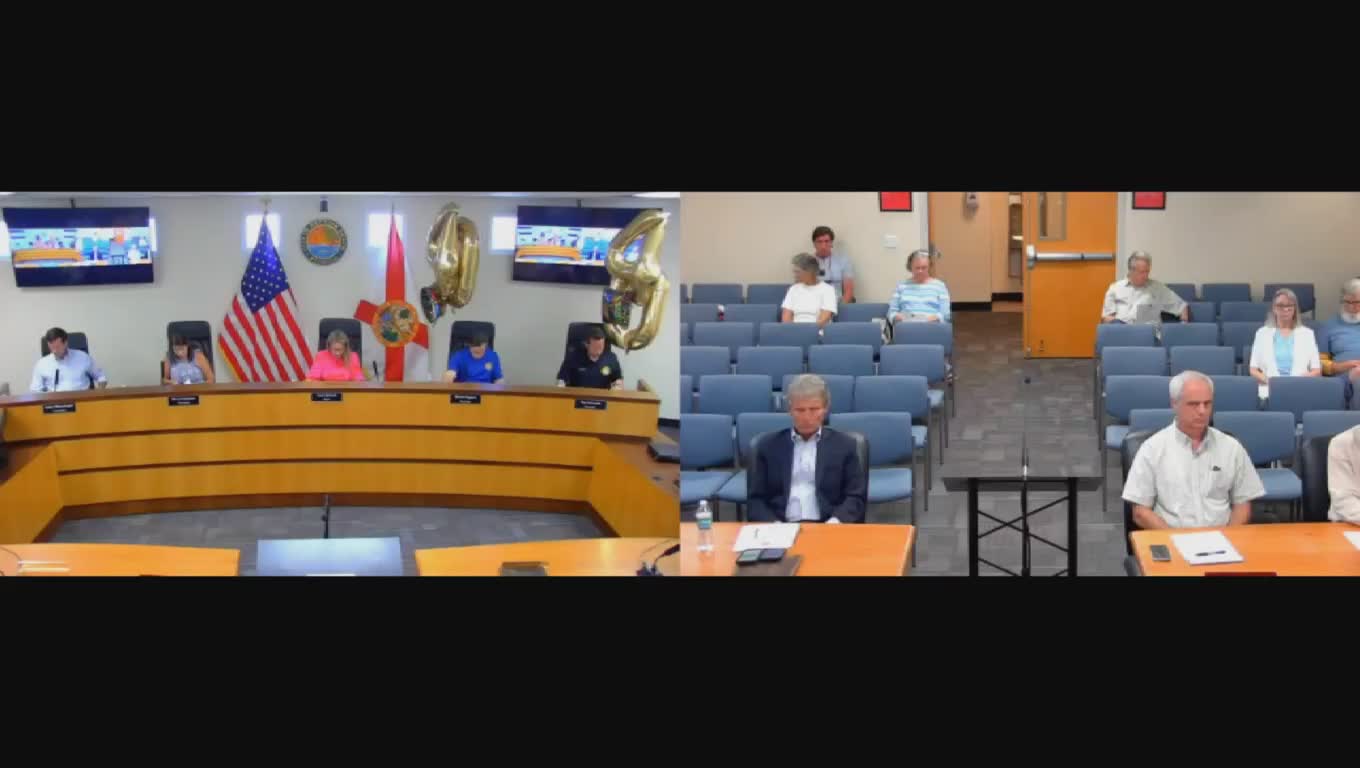
Councilor Rogers presented broker‑supplied valuations May 4 as a first step to evaluate whether the city should explore relocating municipal facilities.
Rogers told the council he had solicited opinions from three commercial real‑estate brokers. For City Hall the brokers’ ranges cited in the record were approximately $5.2 million–$6.5 million (broker A), $2.67 million–$2.94 million (broker B), and $3.08 million–$4.4 million (broker C); for the police station the recorded ranges were about $6 million–$7 million (broker A), $2.927 million–$3.22 million (broker B), and $4.2 million–$5.95 million (broker C). Using those figures Rogers reported combined mid/average estimates that varied substantially depending on which broker estimates were averaged.
Councilors reacted to the wide spread in the estimates and emphasized caveats. Councilor Hordak, citing commercial‑real‑estate experience, warned that some broker figures (notably the highest aggregate numbers) were unrealistic for appraisal purposes and reflected block‑level purchases or special‑purpose buyers. Councilor Messinger and others noted the cost to design and outfit a modern police facility—backup generators, server rooms, fire suppression and secure construction—would likely exceed standard office construction costs and could make relocation costly even if the city sold existing sites.
Council members discussed next steps. Some favored further study, including a possible consultant to develop a needs assessment and cost estimate; others cautioned against paying for a consultant before there were viable relocation options on the market. Councilor Rogers recommended advancing foundational work so the city could act quickly if an opportunity to relocate arose.
What happens next: councilors suggested continuing the conversation, compiling space‑needs data, and notifying the clerk about availability for the May 18 meeting; no formal direction to hire a consultant was recorded on the May 4 transcript.