Get Full Government Meeting Transcripts, Videos, & Alerts Forever!
Get email alerts on the Ems Funding topic
No spam. Unsubscribe anytime.
Altru and Northwood Deaconess officials warn of rising EMS costs and staffing shortfalls
Summary
Altru Ambulance and Northwood Deaconess Health Center executives told the county commission that call volumes and costs have risen markedly, reimbursement lags and nonbillable calls strain budgets, and local levies are needed to sustain 24/7 ambulance coverage.
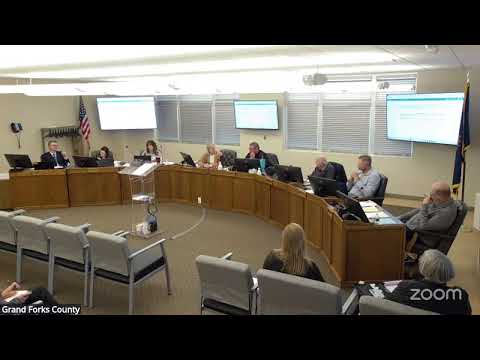
Altru Health and regional ambulance leaders urged Grand Forks County commissioners on Monday to recognize growing pressures on prehospital care and the limits of fee revenue to cover costs. "Our mission is making a difference for those we care for," said Dr. Josh Deer, president of Altru, before the operations overview.
Tim Neesto, manager of Altru Ambulance Service, told the board the service covers roughly 700 square miles and reported about 12,000 calls in 2025, a roughly 25% increase over three years. He said 19% of calls were non‑billable, Medicare/Medicaid made up the majority of billable payers, and rising equipment and labor costs are straining the service: "A dry ambulance now is $320,000…cardiac monitor replacement bids reached about $55,000," Neesto said.
Neesto said Altru must maintain 24/7 coverage under state licensing and cannot choose which calls to answer; that regulatory framework, together with low Medicare/Medicaid reimbursements and increases in non‑transport and nonbillable runs, creates persistent operating losses. Northwood Deaconess CEO Brock Sherva described his critical‑access hospital’s ambulance service covering parts of three counties, reporting 268 calls and a 34% increase over five years; he said 22% of his runs were nonbillable in 2025 and that the service lost roughly $400 per billable run in recent months.
Commissioners asked whether neighboring counties and the city contribute to ambulance costs, and whether staffing metrics and detailed finances could be provided. County staff and presenters agreed to provide annual financial reports and to coordinate follow‑up on whether some state requirements (for example, those tied to population thresholds that trigger ALS staffing obligations) place unfunded burdens on county budgets.
Why it matters: county commissioners are weighing budgets and levy structures that help fund emergency medical services; presenters said levy revenue and intergovernmental arrangements are essential to maintain legally required 24/7 ALS coverage and to recruit and retain staff amid nationwide EMS workforce shortages.
Next steps: commissioners requested financial breakdowns from Altru and NDHC, and staff agreed to explore state funding and reimbursement avenues with the county’s legislative contacts.