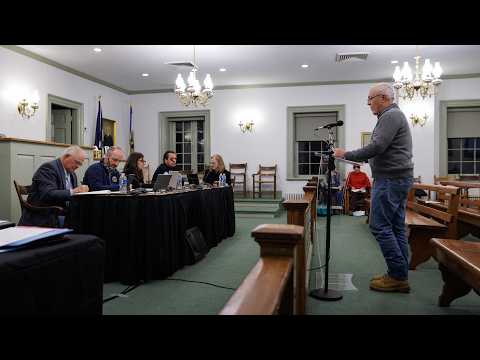
Rappahannock supervisors adopt ordinance to define, regulate electrical substations
Summary
The board voted unanimously to adopt an amendment to the county zoning code adding a definition and special requirements for electrical substations; planning staff and the planning commission recommended approval, while residents urged stricter setbacks, minimum parcel sizes and wildlife impact reviews.
Rappahannock County’s Board of Supervisors voted unanimously to adopt an amendment to the county zoning ordinance that defines electrical substations as a distinct land‑use category and applies special requirements to their siting and expansion.
The planning commission reviewed and unanimously recommended the change, and county staff said the hearing was advertised under Virginia Code §15.2‑224. At the public hearing, residents and local organizations supported the measure as a way to create more transparency and local review of future substation proposals.
Karen Hunt of the Jackson District said she "generally support[s] what is being proposed" but urged the board to strengthen the draft by adding a minimum parcel size, avoiding prime agricultural soils and steep slopes, requiring a minimum 200‑foot frontage on state‑maintained roads, and specifying expected equipment footprints and wildlife‑impact information. "With regard to the minimum yard setback requirement, 100 ft is pretty minimal," she told supervisors.
Sarah Palmer, representing the Piedmont Environmental Council, thanked planners and staff and said the amendment "will ensure greater transparency, impact mitigation, and local control," while noting it would not block substations needed to meet local grid needs. David Aldrich (Hampton District) supported the update but cautioned that local governments have "very limited authority over transmission lines" even though they can require use permits for substations.
During board discussion, supervisors debated whether technical specifics such as parcel size, slope limits and minimum frontage should be written into the ordinance or handled through the special‑exception/permit process. County staff advised that conditions tailored to a site can be applied through the special‑exception permit, allowing case‑by‑case mitigation while avoiding over‑prescriptive ordinance language that could box in future boards.
After discussion, the board adopted the ordinance as presented. The motion passed on a roll‑call of supervisors answering "I"; no opposing votes were recorded.
Next steps: County staff will finalize ordinance text and publish the adopted amendment. The board and staff noted that further, site‑specific reviews will occur when utilities submit permit applications or special‑exception requests.
AI generated
The text on this page is AI generated. Summaries, highlights, analysis, and video transcripts are all produced from the original source material.
AI can make mistakes, so if you spot one, and we will fix it for everyone.
Note: the source content is unaltered by us. Any content source we link to, be it a video, an audio recording, or a document, is presented exactly as its publisher released it. That publisher is usually a government body, sometimes an individual official or another organisation.