Get Full Government Meeting Transcripts, Videos, & Alerts Forever!
Get email alerts on the Ethics topic
No spam. Unsubscribe anytime.
Traverse City introduces new ethics ordinance for possible Oct. 20 enactment
Summary
The commission introduced a proposed ethics ordinance on Oct. 6 that would require annual disclosures and create an independent arbiter to investigate complaints; the ordinance was scheduled for possible enactment Oct. 20 after commissioners and the public suggested changes to complaint windows, transparency and penalties.
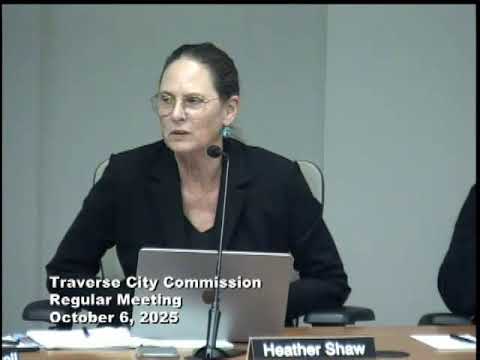
The Traverse City Commission on Oct. 6 introduced an ordinance to establish a citywide ethics code for elected, appointed and employed officials and scheduled the measure for possible enactment at its Oct. 20 meeting.
Commissioner Jackie Anderson, who led the ad hoc committee drafting the text, said the ordinance is intended to "place public service ahead of service to themselves" and to shield the public interest without becoming a vehicle for partisan attacks. The draft defines conflicts of interest, improper use of position, incompatible offices, nepotism, confidentiality rules and uses of public property; it also directs an annual disclosure statement for officials and describes a neutral third-party arbiter to investigate complaints.
Under the proposed process, complaints would be filed in writing and handled initially through an informal review and rebuttal exchange with the arbiter; if unresolved, the arbiter may hold a public hearing and issue a final decision. Penalties are left as a range in the draft and could include administrative discipline (subject to collective-bargaining limits), civil infractions or referral for criminal charges where appropriate, the ordinance says. Commissioners asked staff to return with a clearer menu of enforcement options and suggested lengthening the period to file complaints (the draft used 30 days; several commissioners proposed 90 days for certain matters).
Public commenters and members of the ad hoc praised the draft as a substantial improvement while urging additional training, annual summary reporting and a review of the ordinance after a trial period. Commissioner Anderson said the committee left blanks intentionally to gather input on penalties and other details.
Next steps: commissioners may amend the draft before the Oct. 20 possible enactment vote. Staff agreed to provide proposed penalty language, details about handling complaints involving the city attorney or city manager (including referral to external law enforcement where appropriate), and options for training and annual reporting.