Get Full Government Meeting Transcripts, Videos, & Alerts Forever!
Get email alerts on the Tiff Implementation topic
No spam. Unsubscribe anytime.
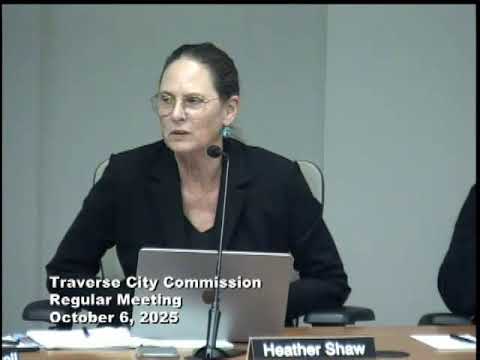
Traverse City adopts implementation policy for TIF-related charter amendments after heated debate
Summary
After lengthy public comment and commissioner debate about ballot clarity, repeat filings and initiative exemptions, the commission voted Oct. 6 to adopt an implementation policy governing tax-increment financing (TIF/TIFF) and related charter amendments.
Traverse City commissioners narrowly approved an implementation policy on Oct. 6 that sets procedures for charter-section 28 measures tied to tax-increment financing and similar district proposals. The measure prompted extensive public comment and a lengthy commission exchange about voters'rights, ballot clarity and whether identical proposals should be permitted to return to the ballot repeatedly.
Opponents of the draft urged additional voter protections. Commissioner Stanley and members of the public argued for clearer "purpose" language on the ballot and a pause before identical proposals can be resubmitted. Local resident Judy Nelson and others warned that existing ambiguity in a prior tall-buildings implementation policy had contributed to years of litigation; Nelson said clearer language could avoid future disputes. Fred Bimber, a longtime local commenter, suggested the policy explicitly exempt initiative- or referendum-driven measures from the new implementation procedures to avoid unintended constraints on voter-driven petitions.
Proponents said the draft closely mirrors an implementation policy already applied to a previous charter amendment (the tall-buildings policy) and that imposing additional limits might unfairly constrain developers and reduce opportunities for projects that serve public benefit. Commissioner Mitch Treadwell and others warned that placing new time limits on repeat ballot measures would conflict with broader democratic practice and could be inconsistent with how other local elections (for example school millages) are handled.
Commissioner Jackie Anderson framed the tension as a balance between voter clarity and applicants' rights. "This unbounded right to reapply undermines voters' rights by fostering ballot fatigue and eroding trust in the process," she said in urging clearer guardrails; other commissioners pushed back, citing potential harms to development options and the difficulty of defining "substantial revision." Several public commenters proposed compromise language (for instance a two-year pause for identical proposals unless substantially changed).
Following the debate and public hearing the commission voted to adopt the implementation policy as presented. The policy includes procedures for submission, statutory requirement checks, and the city commission's role in approving or denying measures returned to it for action.
What happens next: staff will incorporate the policy into commission procedures and provide guidance on ballot language and applicant steps. Public commenters urged a follow-up study session for refined ballot language and clearer exemptions for initiatives and referenda.