San Carlos commission backs objective design standards and code changes to speed multifamily development, remove residential FAR limits
Summary
The Planning & Transportation Commission unanimously recommended that City Council introduce an ordinance to adopt multifamily and mixed‑use objective design standards (ODS), remove a maximum residential FAR, adjust setbacks/stepbacks and create an objective compliance review process to streamline review, while retaining mechanisms for deviations and project‑level oversight.
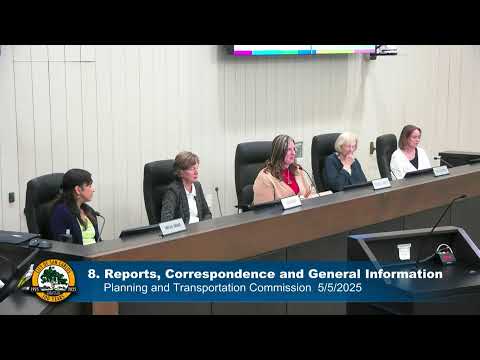
On May 5 the San Carlos Planning & Transportation Commission voted unanimously to recommend the City Council introduce an ordinance adopting multifamily and mixed‑use objective design standards (ODS) and related changes to the municipal code.
What was proposed: principal planner Rucha Dande told the commission the ODS package implements state requirements (citing SB35 and SB330) and the city’s housing element policies by replacing subjective design review findings with clear, measurable criteria for multifamily and mixed‑use zones. Staff recommended the rules apply to the city’s MU and RM zones and would not cover single‑family ODS (already adopted in 2023).
Key policy changes and rationale: consultant Rick Williams said test fits on representative sites showed the existing maximum residential floor area ratio (FAR) was artificially constraining development more than height, setbacks, or stepbacks. Based on that analysis staff recommended eliminating a residential FAR cap while retaining height limits, setbacks and stepbacks, and strengthening transition requirements and a 10‑foot landscape buffer adjacent to single‑family zones.
Other major elements in the proposal: - Ground‑floor residential along El Camino Real (outside the downtown specific plan boundary) would no longer require a conditional use permit; instead first‑floor residential would be allowed by right if projects meet an active‑use and transparency standard (for example, minimum ground‑floor transparency) so streets remain animated. - A new compliance review process would streamline approvals: projects of four or fewer units would be reviewed at the staff level; five or more units would get commission review only on objective criteria (the five‑unit threshold aligns with below‑market‑rate housing plan triggers). - A deviation pathway was proposed: minor deviations reviewed by the director, major deviations reviewed by the commission. Staff told commissioners that director discretion could route borderline items to commission review and that code cleanups could follow implementation to add numeric tolerances if needed.
Projected yield and tradeoffs: consultants estimated the ODS refinements could increase building area and unit counts modestly (example ranges presented: a 10–15% increase in building area in the MU and RM districts in representative test fits, translating to tens of additional units across MU zones). Staff cautioned these are modeled maxima and not all sites will be redeveloped.
Commercial activation ideas: staff offered three non‑binding strategies for encouraging ground‑floor commercial along El Camino and south of Laurel Street — (1) require commercial at key nodes, (2) define priority retail types and streamline approvals, or (3) offer incentives (such as application/fee relief) for targeted uses. Staff emphasized these are outside the ODS scope and require council direction and additional study.
Public concerns and responses: a neighborhood representative asked about potential tall buildings adjacent to single‑family homes and urged attention to safe routes to schools and connectivity. Staff reiterated the project keeps height limits in place, refines transition/setback standards and requires a 10‑foot landscape buffer and arborist‑reviewed trees to improve screening.
Commission action and next steps: the commission moved and approved a resolution recommending that the council introduce an ordinance to amend multiple municipal code sections to implement ODS and the new compliance review process. Commissioners asked staff to explore additional built‑in flexibility for the deviation process; staff will prepare ordinance language, compliance review submittal materials and anticipate council reading(s) in June/July.
Key quotes: “When we looked at it, we were finding that [residential FAR] was actually limiting the amount of development on the sites,” consultant Rick Williams said, explaining why staff recommends removing the residential FAR cap. Rucha Dande summarized the state law context: the ODS will ensure projects are reviewed using “objective criteria only meaning clear and measurable criteria or standards that have no gray area for interpretation.”
Vote: the commission recorded unanimous approval on the motion to recommend the ordinance and to direct staff to explore flexibility in the deviation process.
AI generated
The text on this page is AI generated. Summaries, highlights, analysis, and video transcripts are all produced from the original source material.
AI can make mistakes, so if you spot one, and we will fix it for everyone.
Note: the source content is unaltered by us. Any content source we link to, be it a video, an audio recording, or a document, is presented exactly as its publisher released it. That publisher is usually a government body, sometimes an individual official or another organisation.