Get email alerts on the Transportation Infrastructure topic
No spam. Unsubscribe anytime.
Plan Commission advances six-year streets program to hearing; transportation chapter emphasizes Vision Zero
Summary
The commission heard a kickoff for the six-year streets program (2027–2032) outlining 11 new projects (~$27M total, ~$15M grant-funded), project highlights (Monroe Street bridge rehab, Grand Boulevard reconfiguration) and voted to send the program to a public hearing on April 22; staff also previewed transportation chapter updates prioritizing Vision Zero and multimodal networks.
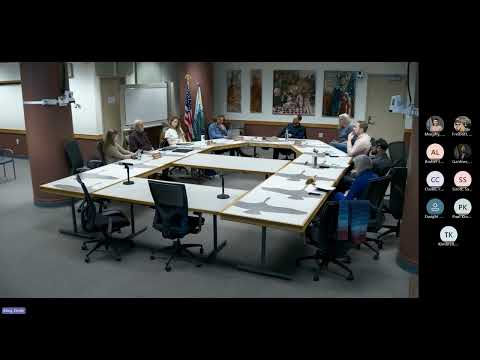
The Spokane Plan Commission voted to send the city’s six-year comprehensive street program to a public hearing after an informational briefing at its March 25 workshop.
Kevin Piconso, director of Integrated Capital Management, told the commission the 2027–2032 program adds 11 new projects totaling roughly $27 million in estimated costs, about $15 million of which is expected from grant awards. "There's 11 new projects going into the program…Roughly $27 million in total project costs amongst those 11 projects," Piconso said, noting most projects target 2027–2028 and eight of the 11 are grant-funded.
Highlighted projects include a Monroe Street bridge deck rehabilitation (estimated $4.3 million, grant-seeking) to address deck and jump-span deterioration, a bundle of three bridge-deck maintenance projects (about $1.6 million, fully funded), and Grand Boulevard (13th–29th) reconfiguration from four lanes to a three-lane section with a center turn lane, pedestrian crossings and bicycle improvements using local funding.
Piconso also described a planning study for upgrading the Centennial Trail (approx. $270,000 grant), a sidewalk infill project on Alberta Street (approx. $800,000), and a set of grant-funded preventive maintenance projects (chip seal and pavement rehabilitation) with construction mostly slated for 2027–2028.
Commissioner (Speaker 4) moved that the six-year streets program go to hearing on April 22; Chair seconded the motion and the commission approved it by voice vote (counts not specified in the transcript). The commission was told a plan commission hearing recommendation will then go to City Council with a target adoption in June for program inclusion and the city’s broader capital-improvement schedule.
During questions, commissioners sought design clarity on larger projects. On the Utah bridge replacement, staff said the initial intention is to rebuild as two travel lanes while designing the structure to allow future reallocation, wider sidewalks and protected bike lanes; staff noted the design will preserve options for future modes, including potential light-rail alignment if needed.
Separately, Colin (staff), who led the transportation chapter update, outlined changes to better integrate safety and multimodal priorities into Plan Spokane 2046. The draft chapter elevates Vision Zero (aiming for zero fatal or serious injury crashes by 2042) and emphasizes right-sizing projects, multimodal and active-transportation networks, mobility hubs rather than park-and-ride language, and more explicit curb-space management to reflect competing uses such as dining and delivery.
What's next: The commission will hold a hearing on the six-year streets program (proposed April 22). Staff said the transportation chapter draft will be folded into the comprehensive plan this spring, with a final draft (including maps and technical appendices) expected in May and adoption planned by the end of the year.
Reported outcomes: Motion to send the six-year streets program to hearing was approved by voice vote; no roll-call tallies were recorded in the transcript.
AI generated
The text on this page is AI generated. Summaries, highlights, analysis, and video transcripts are all produced from the original source material.
AI can make mistakes, so if you spot one, and we will fix it for everyone.
Note: the source content is unaltered by us. Any content source we link to, be it a video, an audio recording, or a document, is presented exactly as its publisher released it. That publisher is usually a government body, sometimes an individual official or another organisation.