East Fishkill opens public hearing on temporary moratorium as zoning rewrite proceeds
Summary
The town opened a public hearing on possibly extending a moratorium that expired Dec. 31, 2025, to give the board time to align zoning updates with a newly adopted comprehensive master plan; several board members and residents supported a six-month extension but the transcript does not record a final extension vote.
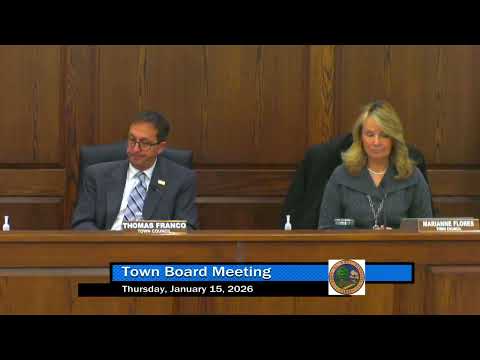
The East Fishkill Town Board opened a public hearing Jan. 15 to consider extending a zoning moratorium that had expired Dec. 31, 2025, while the town implements a newly adopted comprehensive master plan.
Supervisor Del Sandro said the moratorium was enacted to pause development in certain industrial zones adjacent to residential areas until the revised zoning ordinance could be completed and vetted. He proposed extending the moratorium through June 30, 2026, for those specific zones so the town could complete a "bottoms-up" review of zoning changes and avoid "fumbling" future development decisions.
Board members and residents in attendance voiced support for a pause. One board member noted that parties supportive of regulatory pauses often do not attend hearings, while those opposed typically show up; no members of the public in the meeting room indicated opposition during the hearing.
The supervisor and the town's attorney discussed practical constraints: New York State law requires that costs associated with forming new water or sewer districts be borne by the benefiting property owners, and the town said it seeks roughly 70% homeowner support before creating a new water district. That legal constraint was noted in the moratorium discussion as background to land-use and infrastructure decision making.
The public hearing was closed by the board after the room produced no speakers against extension. The transcript records the hearing being closed by voice vote but does not explicitly record a formal, roll-call vote adopting the proposed moratorium extension in the segments transcribed.
The board said it will continue to study the matter and will take further action as needed once additional analyses and community meetings are completed.
AI generated
The text on this page is AI generated. Summaries, highlights, analysis, and video transcripts are all produced from the original source material.
AI can make mistakes, so if you spot one, and we will fix it for everyone.
Note: the source content is unaltered by us. Any content source we link to, be it a video, an audio recording, or a document, is presented exactly as its publisher released it. That publisher is usually a government body, sometimes an individual official or another organisation.