Get Full Government Meeting Transcripts, Videos, & Alerts Forever!
Get email alerts on the Literacy topic
No spam. Unsubscribe anytime.
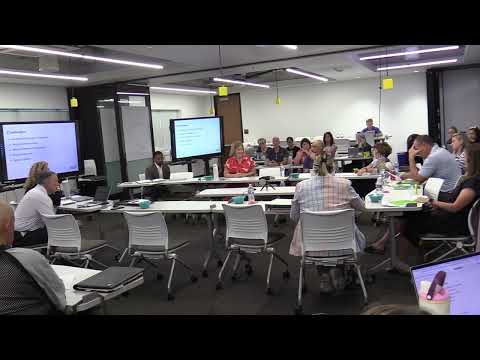
Georgetown ISD outlines literacy framework, adds Amplify phonics after first-year implementation challenges
Summary
At a May 4 workshop, Chief Academic Officer Heather Freine said year one of the district's new curricular resource was bumpy and described steps for year two: embed assessments into unit plans, adopt Amplify for foundational phonics, add curriculum maps with buffer days and a literacy framework emphasizing complex text and shared responsibility.
Chief Academic Officer Heather Freine told trustees at a May 4 Georgetown ISD workshop that year one of the district's new curricular resource required extensive problem-solving and that next year the district will shift from assessment design toward classroom instruction and clearer teacher supports. She said staff will embed unit assessments into curriculum documents and add a supplemental phonics program, Amplify, to strengthen foundational reading skills.
Freine said the district treated the first year as "the year of assessment," working to understand what the data meant and how assessments needed to change. "We spent a lot of time talking about assessment. I call it the year of assessment," she said, adding that staff have begun building next year’s assessments into the curriculum documents so teachers can "plan with the end in mind." The aim, she said, is to make assessment and instruction more coherent rather than building assessments as the year proceeds.
Trustees were told the new resource, referenced in discussion both as "Savas" and "SAS," increased unit rigor by organizing learning around themes rather than genres, which boosted engagement and offered multiple entry points for students. But implementation varied: some teachers followed the teacher edition closely while others used it as a guide and adapted lessons to meet students’ needs. That variation, plus a gap in foundational skills and pacing pressure in primary-grade blocks, led the district to select a supplemental phonics program.
Freine described a vendor-review process that included demonstrations around Presidents Day, a core group that scored resources and a vote that recommended adopting Amplify’s phonics component as a supplemental tool. "We ended up with Amplify which was our resource the year before but just for the phonics—the foundational skills," she said.
Writing alignment also drew repeated attention. Staff told trustees the way writing appears in the curricular resource does not always match the extended constructed responses expected on standardized end-of-year assessments (STAR). Freine said the district has adjusted assessments midyear and will continue to "backwards map" instruction to make sure students receive feedback that prepares them for the formats used on formal assessments.
To ease teacher workload and clarify pacing, the district will publish weekly maps at the front of each unit document, mark buffer days for interruptions, and hyperlink standards so teachers can access supporting detail without wading through long front pages. Freine said the changes are meant to let teachers "internalize" a lesson and then tune it rather than scramble each day to decide what to teach.
The district also presented a literacy framework that emphasizes access to grade-level complex text, multiple opportunities for students to cite evidence in speaking and writing, and shared ownership of literacy across content areas. Staff emphasized supports for multilingual learners and the importance of both foundational phonics and higher-order comprehension work.
Trustees and staff did not take any formal votes on curriculum that night; staff said they will continue to gather teacher feedback, finalize the embedded assessments for next year and offer resources to reduce technological and access friction. The district will report back to the board with implementation metrics and ongoing teacher-survey feedback as the year progresses.