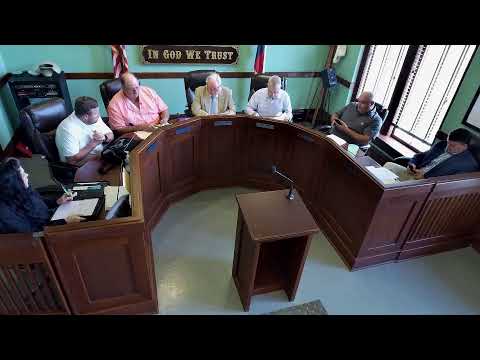
Trinity County proclaims April observances and honors telecommunicators
Summary
Trinity County Commissioners Court on April 14 approved proclamations designating April 2026 as Sexual Assault Awareness Prevention Month and Child Abuse Prevention Month, and recognized National Public Safety Telecommunicators Week (April 12–18); the actions were approved by voice vote and included calls for community support and services.
Trinity County Commissioners Court approved three proclamations on April 14, 2026, urging community action on public safety and family support. The court read and approved a proclamation designating April 2026 as Sexual Assault Awareness Prevention Month, citing national and local statistics and calling on residents to support survivors. The court then approved a proclamation naming April 2026 Child Abuse Prevention Month and a resolution recognizing April 12–18, 2026, as National Public Safety Telecommunicators Week.
The volunteer coordinator with a local safe-housing program introduced the Sexual Assault Awareness proclamation and read the text noting national incidence and local registrant counts, and Miss Asia (identified in the meeting as the Trinity County coordinator) was acknowledged during the presentation. County officials voiced appreciation for the work of advocates and volunteers and moved the proclamations to a voice vote; each was seconded and the court approved them without recorded opposition.
The telecommunicators resolution highlights dispatchers’ role as the critical first point of contact in emergencies and encourages citizens to recognize their service. The proclamation texts as read referenced local partnerships among advocates, schools, faith communities, law enforcement and businesses as essential to prevention and support efforts.
The proclamations were ceremonial actions intended to raise awareness and did not include binding policy or new budget commitments. The court proceeded afterward to routine business including personnel forms, check register approval and budget amendments.
AI generated
The text on this page is AI generated. Summaries, highlights, analysis, and video transcripts are all produced from the original source material.
AI can make mistakes, so if you spot one, and we will fix it for everyone.
Note: the source content is unaltered by us. Any content source we link to, be it a video, an audio recording, or a document, is presented exactly as its publisher released it. That publisher is usually a government body, sometimes an individual official or another organisation.