Get Full Government Meeting Transcripts, Videos, & Alerts Forever!
Get email alerts on the Religious Instruction topic
No spam. Unsubscribe anytime.
Local proponent urges Franklin County to adopt "release time" religious instruction program
Summary
At the board meeting Linda Johnson described Lifewise Academy's release-time religious instruction model, cited a 1952 Supreme Court precedent and presented national participation figures while answering board questions about funding and legal criteria.
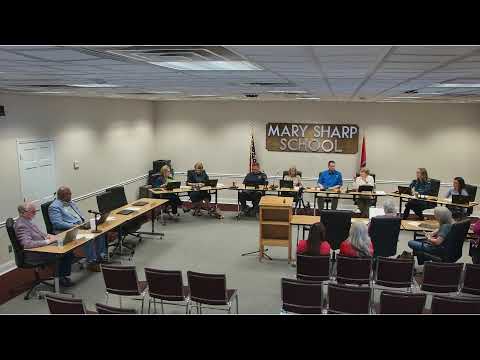
Linda Johnson of Lifewise Academy addressed the Franklin County Board of Education to explain the group’s model of release-time religious instruction and to request the district’s cooperation in scheduling student release time.
Johnson described Lifewise as a privately funded, off-campus program that requires parental opt-in and cited the 1952 U.S. Supreme Court decision Zorach v. Clauson as legal precedent permitting release-time religious instruction when three criteria are met: private funding, off-school-property instruction and parental choice. She said Lifewise has served “more than 90,000 students” and currently operates in about 980 schools across 33 states, and claimed independent study findings linking Lifewise implementation to improved attendance and reduced suspensions.
Johnson summarized the program’s operations: the school would provide a release schedule for students who opt in; the instruction would be provided outside of the school day (off school property) and the program would be funded privately. She told the board: “The mission of Lifewise is to reach all students in public schools with the gospel through a high quality community driven release time religious instruction program.”
Board members asked questions about legal and operational limits; Johnson reiterated the three legal criteria and said Lifewise would not require district funding or incur district costs. The presentation was given during the public-comment/presentation portion of the meeting; the board did not take formal action on Lifewise at this session.
The board may request follow-up materials, such as a sample operating agreement and documentation of the off-campus locations and parent opt-in process, before considering any formal administrative step.