Get email alerts on the Zoning topic
No spam. Unsubscribe anytime.
Town planner outlines multi-step zoning code rewrite to implement comprehensive plan
Summary
Town planner Valerie Monostra presented a first round of zoning text amendments meant to implement the 2022 comprehensive plan, including clarified definitions, a consolidated use table, modest updates to performance standards, and new public-review steps (SEQRA, GML referrals, and public hearings).
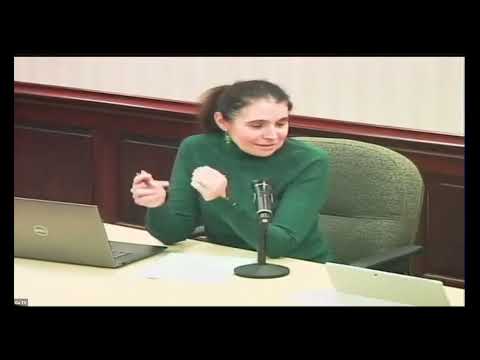
Valerie Monostra, the town planner, told the Ossining board on Dec. 16 that the board is beginning “round one” of zoning text amendments intended to implement recommendations of the town’s 2022 comprehensive plan. Monostra said the package focuses on clarifying definitions, creating a single use table to show permitted and special-permit uses, and reorganizing the zoning chapter to make it easier for residents and applicants to understand what is allowed.
The proposed edits are primarily organizational but include some substantive changes, Monostra said. She highlighted provisions to “protect and enhance natural environments and habitats,” promote clustering and open-space subdivisions, encourage adaptive reuse of historic buildings, and update performance standards (noise, emissions and vibration) in the office-and-research zoning district. Monostra also said the subcommittee that drafted the changes included representation from the planning board, zoning board of appeals and town board.
Town counsel or staff adviser Christie cautioned that the process will require state environmental review and routine referrals. “Because of the nature of this action in adopting zone text amendments, you are going to have to do review pursuant to the state environmental quality review act,” Christie said, noting the town board will serve as lead agency and that the amendments will be sent to county planning and neighboring municipalities for comment before a public hearing is opened.
Board members asked for clarifications about a handful of substantive items. Monostra described a minor increase to minimum apartment sizes in the Neighborhood Center district—adjusting studio minimums by about 25 square feet to encourage more habitable layouts—and said other substantive edits are limited to updating performance standards and removing antiquated definitions. The board discussed nonconforming uses and how the code should treat restoration after damage, with Christie noting current law generally allows continuation unless the use lapses for one year.
Monostra and Christie underscored that this is the start of an iterative public process: the board will review the draft zoning text, staff will circulate it for required referrals and environmental review, and the town will hold public hearings and additional work sessions to address public and agency comments before any final action. The board did not vote on the amendments at the session; staff was asked to proceed with the referral and SEQRA steps and to return with clarified language and next steps.
Looking ahead, Monostra said the town expects several more rounds of edits over the coming months as the board and staff refine the draft and respond to feedback from other agencies and the public.
AI generated
The text on this page is AI generated. Summaries, highlights, analysis, and video transcripts are all produced from the original source material.
AI can make mistakes, so if you spot one, and we will fix it for everyone.
Note: the source content is unaltered by us. Any content source we link to, be it a video, an audio recording, or a document, is presented exactly as its publisher released it. That publisher is usually a government body, sometimes an individual official or another organisation.