Get email alerts on the Infrastructure topic
No spam. Unsubscribe anytime.
Kennett Council asks staff to draft updates to sidewalk code, explores rebate program
Summary
Council asked staff to craft a revised sidewalk ordinance that would clarify homeowner responsibility, require trimming branches obstructing walkways and establish inspection frequency; members discussed 30–60 day cure windows versus a proposed one‑year notice and a potential sidewalk rebate fund.
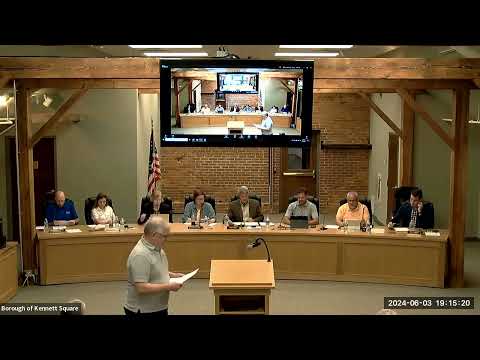
Kennett Borough Council asked staff to prepare a revised ordinance to update sidewalk and public‑right‑of‑way maintenance rules, including clearer standards for inspection, notice periods and homeowner obligations.
Lexi, the borough zoning and codes officer, laid out proposed changes: require tree branches to be kept at least 7 feet above sidewalks, specify the degree of sidewalk damage that constitutes a violation, institute more‑regular inspections (a phased annual program), and make the landowner responsible for repairs. Lexi said the code could include a fee or notice process for noncompliance and that timelines should be tailored to seasonality (for example, longer cure periods in winter).
Council members and residents urged caution on timing and costs. Several council members recommended a phased enforcement approach with extended notice — suggestions ranged from 30–60 days to a one‑year transition period so homeowners can budget for potentially high repair costs. Public commenters, including real estate and disability advocates, highlighted historic sidewalks (brick and bluestone), ADA access problems and the financial burden on older and lower‑income homeowners.
Council discussed a possible sidewalk rebate program to offset repair costs: staff would create a fund to reimburse some portion of repair costs (example language discussed was a per‑square‑foot rebate model). Lexi said the program’s details, funding source and eligibility criteria were not yet determined.
Council voted to direct staff to develop a revised ordinance reflecting these comments and to return a draft at a future meeting for public review. The revision will include clearer technical measurements for defects, discretionary timelines for repairs, and options for financial assistance or grants to preserve historic sidewalks and help low‑income property owners.
Next steps: staff will draft the ordinance language and estimate program costs and enforcement timelines for council review and public comment.
AI generated
The text on this page is AI generated. Summaries, highlights, analysis, and video transcripts are all produced from the original source material.
AI can make mistakes, so if you spot one, and we will fix it for everyone.
Note: the source content is unaltered by us. Any content source we link to, be it a video, an audio recording, or a document, is presented exactly as its publisher released it. That publisher is usually a government body, sometimes an individual official or another organisation.