Get Full Government Meeting Transcripts, Videos, & Alerts Forever!
Get email alerts on the Policy topic
No spam. Unsubscribe anytime.
Worcester CPC narrows religious-building funding to exteriors, adds tax-check and application requirements
Summary
The committee agreed to generally limit Community Preservation funding for religious buildings to exterior work, require the city to screen housing-duplication concerns, add tax-status checks to applications, and retain an emergency/out-of-cycle funding pathway; it voted to post the amended plan for a May 26 hearing.
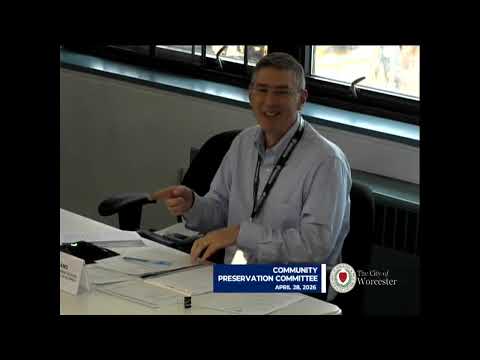
The Worcester City Community Preservation Committee voted to adopt several policy clarifications at its April meeting and to post the amended Community Preservation Plan for public notice ahead of a May 26 hearing.
Members and staff discussed recurring issues from earlier funding rounds — interior work at religious buildings, overlap with existing city housing programs, for-profit owners seeking funding, and the need for clearer application requirements. Paul Morano, assistant chief development officer, said the administration recommends generally limiting CPA funding for religious buildings to exterior work, consistent with many Massachusetts communities and the Massachusetts Commission’s practice, while leaving room to consider interior infrastructure for multi‑use community services (heat, plumbing, electrical) under emergency or out‑of‑cycle review.
The committee also directed staff to add an application question and review step to confirm applicants’ tax status and to include hazardous building materials surveys (lead, asbestos, PCBs) in application materials. Members discussed scoring-rubric changes and stronger clawback and affordability/use restrictions if the committee funds projects owned by for-profit entities; they agreed in principle but deferred detailed clawback language for staff and future drafting.
Chair William Eddy asked staff to confirm whether the historical commission has selected a replacement for a recent vacancy and to invite that appointee to the May hearing. The committee then voted to post the plan and schedule the May 26 hearing to satisfy the program’s annual public-notice and hearing requirements.
What happens next: staff will add the tax-status question and hazardous-materials guidance to the application, finalize contract templates, and post the amended plan for a May 26 public hearing.