Get email alerts on the Environmental Review topic
No spam. Unsubscribe anytime.
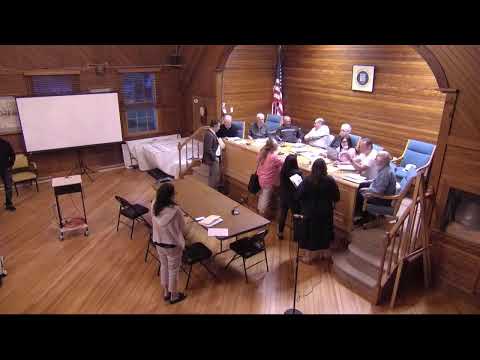
Clinton planning board issues positive declaration, opens 60‑day scoping period for CECNY project
Summary
The Town of Clinton Planning Board voted to issue a positive declaration and circulate a draft scoping document for a proposed CECNY Land Holdings project, opening a public comment period through June 26 and setting a procedural schedule that could culminate with a final scoping decision in early July.
The Town of Clinton Planning Board voted to issue a positive declaration and circulate a draft scoping document for a proposed development by CECNY Land Holdings, opening a 60‑day scoping period and a public comment window that the board, staff and the applicant discussed at length.
The applicant’s representative, Kelly Lolt of KC Planning Consultants, told the board the applicant delivered a draft scoping document to the town on May 8 and posted it to the town website. Lolt said the applicant’s reading of the regulations was that the 60‑day scoping clock began on that May 8 submission: "the SEQR regulations state that the 60‑day scoping period starts upon submission of the draft scope by the applicant," she said and requested the board amend a recital in the posted resolution that stated the 60‑day period would begin upon issuance of a positive declaration.
Board counsel and staff responded that, in the board’s procedural sequence, scoping follows issuance of a positive declaration. A staff attorney said that if the planning board "decides that a positive declaration that a draft environmental impact statement should be prepared," issuing that declaration triggers the formal circulating of the draft scope and the public comment window. Counsel emphasized that while the board can identify four topics it views as potentially significant, scoping notices are typically worded "including but not limited to" because involved agencies or members of the public may raise additional issues for consideration.
Attorney Ken Stanganger, who introduced himself as representing parties that have opposed the project in other proceedings, urged the board to set fair and practical deadlines and noted a history of repeated objections and litigation involving similar projects. "People deserve to be heard," Stanganger said, urging the board to weigh how much additional public comment time to give while recognizing long‑standing public engagement on the matter.
A motion was made to adopt a resolution issuing a positive declaration, circulate the applicant’s draft scoping document with the notice to all involved and interested agencies, and open public scoping. The chair announced that the "motion carries." The posted draft resolution included language stating the 60‑day scoping period "shall commence upon issuance of this positive declaration;" the board discussed the timing and procedural steps that would follow circulation.
Board members and staff outlined next steps and logistics: public comments on scoping issues will be accepted until 5:00 p.m. Eastern on June 26, 2026, and should be submitted as a single email or letter to the planning office. Staff and board members indicated they expect to begin substantive scoping discussions at upcoming meetings, with July 7 named as a target date to review comments and work toward a final scoping document. The applicant is required to circulate notices to involved agencies and provide affidavits of mailing; the resolution as posted also directs notice to be submitted for publication in the New York State Department of Environmental Conservation environmental notice system.
The planning board emphasized that scoping is intended to narrow and define the environmental issues the draft environmental impact statement (EIS) will evaluate — for example, the board asked the applicant to make clear how the EIS will define and test community character, and suggested baseline water‑quality sampling for the creek that could receive project discharge. Board counsel noted the scoping process is public and coordinated with involved agencies, and that agencies may still raise issues that the board had not initially identified.
The immediate procedural effect of the vote is to circulate the draft scoping document and open the formal scoping comment period. The board will review written comments and agency input, revise the scope if needed, and then the applicant will prepare a draft EIS addressing the final scoping document; the board will have a further review period when that draft EIS is submitted.
AI generated
The text on this page is AI generated. Summaries, highlights, analysis, and video transcripts are all produced from the original source material.
AI can make mistakes, so if you spot one, and we will fix it for everyone.
Note: the source content is unaltered by us. Any content source we link to, be it a video, an audio recording, or a document, is presented exactly as its publisher released it. That publisher is usually a government body, sometimes an individual official or another organisation.