House panel weighs bills to modernize Clean Air Act mobile-source rules
Summary
A House committee hearing introduced 10 discussion drafts aimed at updating Title II of the Clean Air Act for mobile sources; the chair warned a proposed California locomotive standard and the waiver process could force nationwide changes that disrupt freight operations and impose steep costs on rail carriers.
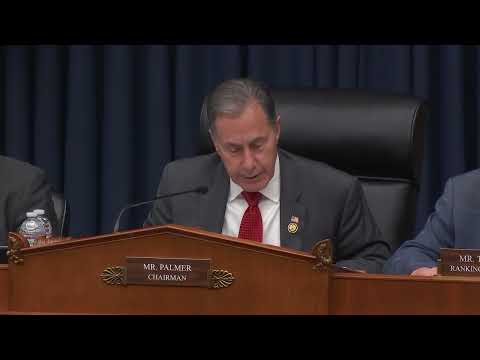
The chair opened a House committee hearing titled “Rules of the Road: Examining Legislation to Modernize the Clean Air Act's Mobile Source Requirements,” saying the session will consider 10 discussion drafts aimed at updating Title II of the Clean Air Act, which governs mobile sources. The chair framed the effort as an attempt to protect the environment without sacrificing economic growth.
The chair singled out the California waiver and a 2023 proposed regulation from the California Air Resources Board as central concerns. He said the CARB proposal would have banned operation in California of any locomotive 23 years or older unless it ran in a zero-emissions configuration. According to the chair, that proposal — withdrawn before the current administration — would have effectively prohibited roughly 67% of the national locomotive fleet from entering California and accessing two of the nation’s largest ports, potentially forcing trains to stop at state borders to swap equipment and increasing transit time and cost.
The chair argued those disruptions could carry national security implications and said two of the largest U.S. rail carriers estimate they would each incur about $800,000,000 in annual compliance costs under the withdrawn proposal. “California should not dictate national policy,” the chair said, urging Congress to modernize the statute so national standards are set by federal lawmakers rather than state action through the waiver mechanism.
The chair also introduced the Locomotive Act, described in the hearing as legislation introduced by Representative LaMalfa and championed by Representative Oberonolte, as an example of the types of bills under consideration. He invited testimony from witnesses with experience on how older provisions in Title II affect industry and enforcement and asked for feedback on the discussion drafts.
Witness testimony was expected to follow the opening statement; the chair encouraged a constructive dialogue as the committee considers changes to the Clean Air Act’s mobile-source provisions.
AI generated
The text on this page is AI generated. Summaries, highlights, analysis, and video transcripts are all produced from the original source material.
AI can make mistakes, so if you spot one, and we will fix it for everyone.
Note: the source content is unaltered by us. Any content source we link to, be it a video, an audio recording, or a document, is presented exactly as its publisher released it. That publisher is usually a government body, sometimes an individual official or another organisation.