Get email alerts on the Floodplain Resilience topic
No spam. Unsubscribe anytime.
Planning staff outlines $125,000 state floodplain program and explores regional code-enforcement pilot
Summary
Planning staff told commissioners the state is rolling out a regional floodplain assistance program that will provide $125,000 yearly to each RPO; the planning office also described preliminary work on a regional code enforcement service based on a Kennebec Valley model and said it will return with a program proposal.
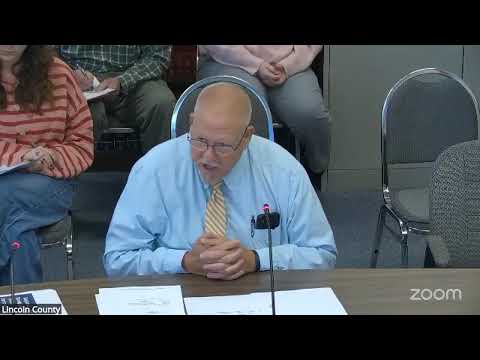
Planning staff updated the Lincoln County commissioners on two related initiatives: a new state regional floodplain assistance program and exploratory work on regionalizing code enforcement.
The planning director said the state’s resilience office (legislation LD 1) will fund a regional floodplain manager position for each regional planning organization, with approximately $125,000 per year available to support the role. The county expects contracts to be sent late June or early July and said the funding would support training and certification for a local staffer; planning staff estimated the person could be certified within about six months of hire.
Separately, planning staff described conversations about a regional code enforcement office to provide inspections, plan reviews and backup coverage for smaller towns. Officials said the Kennebec Valley Council of Governments model — which began with six participating municipalities and expanded — provides a template for staffing, shared ordinances, and subscription-style contracts with towns. Planners said they were considering starting with two staff to ensure backup coverage and would structure work so that municipal planning boards retain control over discretionary reviews.
Commissioners asked about municipal control, contract structure and expected costs; planning staff said they will meet with additional towns to refine the model and will return to the commissioners with a more defined program proposal and a job description if the state contract comes through.
AI generated
The text on this page is AI generated. Summaries, highlights, analysis, and video transcripts are all produced from the original source material.
AI can make mistakes, so if you spot one, and we will fix it for everyone.
Note: the source content is unaltered by us. Any content source we link to, be it a video, an audio recording, or a document, is presented exactly as its publisher released it. That publisher is usually a government body, sometimes an individual official or another organisation.