Get email alerts on the Housing topic
No spam. Unsubscribe anytime.
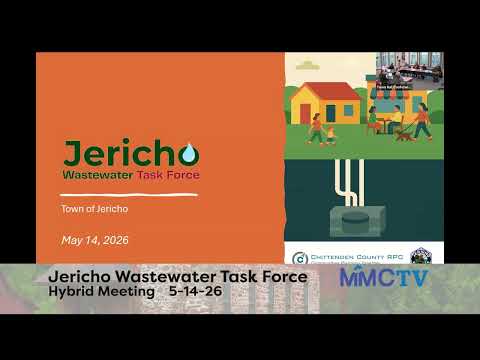
Task force hears scenario data: baseline ~38 units, community system could support hundreds depending on design
Summary
Presenters walked the task force through baseline and build-out scenarios for the Riverside Village Center: baseline is about 38 dwelling units; a low-intensity on-site septic scenario estimates ~57 units while a moderate community-wastewater scenario uses a DNK peer low estimate (~56,000 gpd) and yields roughly 245 units (phase-one ~23 units excluded).
At the meeting the scenario-development lead summarized baseline and build‑out assumptions for the Riverside Village Center study area and explained how wastewater method dramatically changes potential housing outcomes.
Using parcel data and permitted subdivision footprints as a baseline, the lead reported about 38 existing dwelling units and roughly 20,000 square feet of commercial space in the study area. In a low‑intensity scenario (continued on‑site septic only), the modeling produced roughly 57 potential dwelling units if development continues along currently permitted lot sizes and septic configurations.
In a moderate‑intensity scenario that assumes a community wastewater system, the presenters used a conservative peer estimate of about 56,000 gallons per day to size capacity; that scenario produced roughly 245 dwelling units (excluding a separately permitted Phase 1 development of approximately 23 units). Presenters cautioned that these are assumptions for visualization and financial modeling; occupancy rules, ADU counts, and the final gallons‑per‑unit assumptions materially affect the outcome.
Members discussed housing mix questions (one‑bedroom/studio units, senior housing and duplex/triplex typologies), how wastewater gallons per bedroom factor into counts, and how an experimental site‑specific test (required above certain capacity thresholds) could change allowable loading. The presenters said the scenario materials and visuals will be revised once DNK provides groundwater and corridor‑adjusted capacity numbers.
The task force agreed to continue refining scenario visuals to make trade‑offs clearer for public outreach.
AI generated
The text on this page is AI generated. Summaries, highlights, analysis, and video transcripts are all produced from the original source material.
AI can make mistakes, so if you spot one, and we will fix it for everyone.
Note: the source content is unaltered by us. Any content source we link to, be it a video, an audio recording, or a document, is presented exactly as its publisher released it. That publisher is usually a government body, sometimes an individual official or another organisation.