Get Full Government Meeting Transcripts, Videos, & Alerts Forever!
Get email alerts on the Zoning And Building Code topic
No spam. Unsubscribe anytime.
Board approves zoning updates and considers updated building‑code enforcement
Summary
The board approved amendments to the county zoning ordinance (Chapter 70) expanding permitted dwelling uses in commercial districts, short‑term rental clarity and rules for temporary parking at large events; staff also presented first‑reading amendments to the uniform dwelling code to clarify inspections and raise penalties for unpermitted occupancy.
The Chippewa County Board approved changes to the county zoning ordinance that broaden rules for dwelling units in commercial districts, add limited temporary parking allowances for large events, and expand permitted home occupations (with some restrictions for septic‑served personal services).
Planning staff said the amendments—developed jointly with six zoned towns—clarify that dwelling units in commercial districts may be rented short‑term or long‑term, allow limited temporary event parking on private property under restrictions, and relax some home‑occupation limits to reflect post‑COVID work patterns while retaining safeguards for professional and septic‑served services.
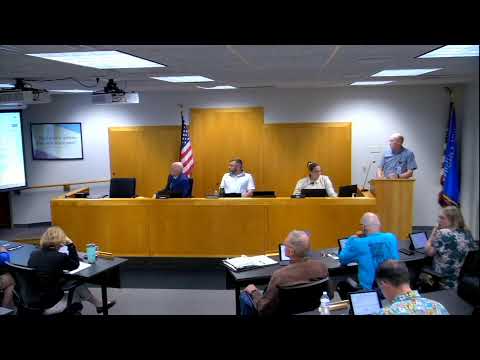
The board waived a second reading and approved the zoning ordinance amendments by the required two‑thirds vote (16–0). Separately, building inspection staff presented first‑reading amendments to the county’s uniform dwelling code: clarifying inspection authority, offering optional inspections for pre‑1980 structures when owners request them, expanding the county’s inspection role for electrical service changes and detached accessory structures, and increasing penalties for moving into units without final occupancy permits. Several supervisors asked staff to ensure that ordinary repairs such as reroofing or window replacement remain exempt from unnecessary permitting.
Both code items aim to update local rules to reflect current housing uses and to provide clearer enforcement tools for protecting occupants and preserving construction standards.