Committee backs MTSS-based elementary behavior-response plan, recommends trained intervention staff and flexible spaces
Summary
RSU 11/MSAD 11’s curriculum committee unanimously endorsed a district plan to create tiered elementary behavior-response spaces and staff (including an edtech-3 specialist per building and a stipended behavior coordinator) to provide intensive, non-punitive supports under MTSS.
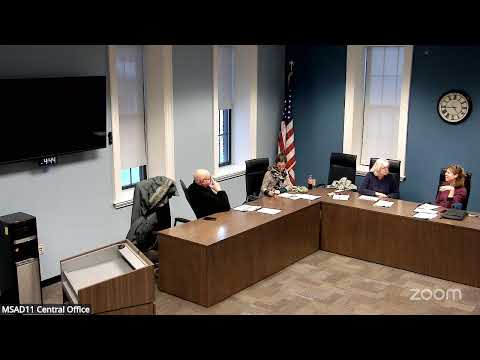
The RSU 11/MSAD 11 curriculum committee on Feb. 3 voted unanimously to support a district proposal to formalize elementary behavior interventions through an MTSS framework, including creation of flexible intervention spaces and dedicated trained staff.
Angela Hardy, director of curriculum, framed the proposal as a response to increasing behavioral regulation needs in early elementary grades and cited federal special-education expectations on behavioral interventions. "Behavior is an educational issue when it interferes with learning," Hardy said, referencing the Individuals with Disabilities Education Act (IDEA) as part of the legal rationale for providing positive, evidence-based interventions rather than relying solely on exclusionary discipline.
The concept calls for each elementary building to have a flexible alternative intervention space rather than a punitive quiet room. Students would not be removed from instruction permanently; instead, teams would identify needs through MTSS, match interventions to the function of behavior (avoidance, trauma response, physical regulation, skill-based response), and provide targeted daily intervention time in a low-stress environment. Staff stressed that such spaces would include purposeful instructional materials and structured tasks tied to skill building rather than recreation.
The proposal recommends a trained edtech-3 specialist per elementary building (or reclassification of existing edtech staff where feasible) and a stipended district behavior coordinator who would convene monthly training, provide early-release planning time and ensure consistency across buildings. Start-up costs described include flexible seating, targeted instructional materials and small supplies; staff noted these are modest but require line items in building budgets.
Hardy described data collection and decision-making materials — a decision guide and communication forms — to track interventions, re-entry steps and exit criteria; family engagement is required as part of the MTSS process. Committee members expressed concern about staff burnout and the need for persuasive messaging to taxpayers explaining the proposal’s benefits. Linda Caputo moved to support the intervention model and Tony V seconded; the motion carried unanimously.
The committee asked staff to continue budget work and to explore internal staffing moves where edtech-1 positions could be reclassified to edtech-3 where appropriate. Staff will return with costed implementation plans as part of the curriculum budget process.
AI generated
The text on this page is AI generated. Summaries, highlights, analysis, and video transcripts are all produced from the original source material.
AI can make mistakes, so if you spot one, and we will fix it for everyone.
Note: the source content is unaltered by us. Any content source we link to, be it a video, an audio recording, or a document, is presented exactly as its publisher released it. That publisher is usually a government body, sometimes an individual official or another organisation.