Get email alerts on the Local Development topic
No spam. Unsubscribe anytime.
Ward 4 councilman on growth and code: 'We can't stop something that's permitted'
Summary
Ward 4 Councilman Bobby Phillips discussed development, code-enforcement trends and zoning limits on the Zonein podcast, noting that many complaints are neighbor-driven and that permitted uses cannot be blocked by public opposition. He also described Casa J's leadership transition.
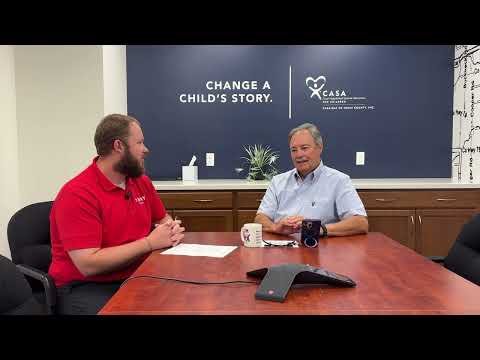
Taylor Bruner, a zoning inspector for the city of Troy and host of the Zonein podcast, interviewed Ward 4 Councilman Bobby Phillips at the Hobart Civic Center about development, permitting and code enforcement in the southwest ward.
"I've been on council — this is my 17th year," Phillips said, summarizing a long record in local government after a 30-plus-year policing career in California. He described Ward 4 as a mix of single-family homes, Section 8 housing, higher-end residential areas and light industrial and retail corridors, and said recent annexations have put more commercially zoned land into play.
Bruner presented current-year enforcement numbers he said he compiled: "We have 14% of all code violations happen in Ward 4," he said, adding that more than 80% of those cases are tall grass and weeds. He also said Ward 4 accounts for about 24% of the city's permits this year, driven by new-home construction, fences and accessory structures.
Phillips and Bruner emphasized the limits of municipal zoning authority. "We can't stop something that's permitted to be there per zoning the rules," Phillips said, explaining that the city can impose development standards — such as buffer yards and an eight-foot clearance for tree canopy over sidewalks — but cannot veto uses lawfully allowed in a zoning district.
The conversation highlighted recurring neighborhood concerns and how they are handled. Both men said most code-enforcement cases start with neighbor complaints rather than city staff detections; anonymous reports are common and staff will investigate visible violations. Phillips urged residents to provide specific locations and details so staff can respond effectively.
On economic development, Bruner and Phillips listed several employers and projects in or near Ward 4, including Collins Aerospace and the growing Troy Business Park. Phillips expressed hope that annexed commercial parcels and highway-fronting property will attract new restaurants and entertainment uses.
Phillips also discussed civic amenities and fiscal priorities. He described parks and infrastructure (water, sewer, stormwater and roads) as expensive but essential services and urged residents to consider long-term fiscal trade-offs when discussing levies and rate changes.
The conversation included Phillips's nonprofit work: he said he joined Casa J through Leadership Troy, served as an advocate and later as past president, and that the organization's executive director is leaving at the end of the year; the board is conducting a search for a successor.
The episode concluded with an appeal to residents to consult the city's website for calendars and contact information and to reach out directly by phone or email with specific questions so staff and council can follow up.
No formal votes or council actions were taken during the interview; the segment was a recorded discussion about policy, practice and civic engagement.
AI generated
The text on this page is AI generated. Summaries, highlights, analysis, and video transcripts are all produced from the original source material.
AI can make mistakes, so if you spot one, and we will fix it for everyone.
Note: the source content is unaltered by us. Any content source we link to, be it a video, an audio recording, or a document, is presented exactly as its publisher released it. That publisher is usually a government body, sometimes an individual official or another organisation.