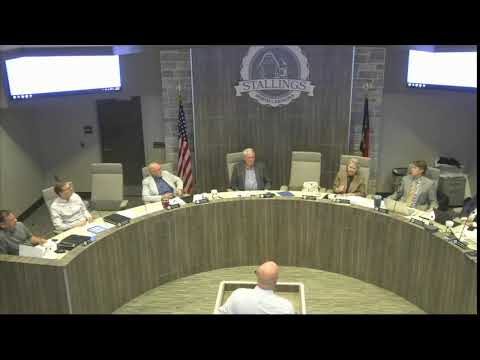
Stallings staff proposes broader ban on open burning, including new enforcement penalties
Summary
Staff proposed revisions to the town’s open-burning ordinance to prohibit burning of most materials, remove land-clearing and right-of-way exceptions, authorize police to enforce, and allow civil citations up to $100 for a first offense; council members raised enforcement and outreach questions.
Town planning staff presented proposed revisions to the open-burning chapter of the code aimed at strengthening public-safety enforcement, improving air quality and closing enforcement gaps. The revisions would prohibit open burning of any material within town limits unless explicitly exempted and would eliminate existing exceptions for land-clearing and right-of-way maintenance.
Staff said the updates would clarify definitions, permit narrow exemptions for campfires, outdoor cooking, ceremonial fires and fires used for warmth (so long as they do not create a nuisance or burn prohibited materials), and would authorize both code enforcement officers and the Stallings Police Department to issue civil citations. The draft would allow a civil penalty of $100 for a first offense at the discretion of enforcement officials.
Council members asked for clarity on routine backyard fire-pit use versus large piles of yard-waste disposal, and how the change would be communicated. Staff said the ordinance targets large, disposal-oriented burns and repeated yard-waste burning that led to public-safety incidents, and that staff would enforce discretion and work with the police department for weekend complaints.
No final vote was taken; staff recommended approval in concept and council asked questions about outreach and enforcement consistency before taking action at a future meeting.
AI generated
The text on this page is AI generated. Summaries, highlights, analysis, and video transcripts are all produced from the original source material.
AI can make mistakes, so if you spot one, and we will fix it for everyone.
Note: the source content is unaltered by us. Any content source we link to, be it a video, an audio recording, or a document, is presented exactly as its publisher released it. That publisher is usually a government body, sometimes an individual official or another organisation.