Get Full Government Meeting Transcripts, Videos, & Alerts Forever!
Get email alerts on the Direct Care Workforce topic
No spam. Unsubscribe anytime.
WIS Caregiver Careers campaign promotes free CDCP training and $500 bonus, highlights K–12 pathways and bilingual outreach
Summary
Presenters from Pogorsch Media Design summarized WIS Caregiver Careers' branding, bilingual websites and multimedia ads to recruit certified direct care professionals (CDCPs); they described partnerships with Wisconsin Department of Health Services and University of Wisconsin–Green Bay and reported more than 18,000 registrants and a roughly 5.2% conversion rate.
A marketing team described a statewide campaign to recruit certified direct care professionals, saying the WIS Caregiver Careers initiative offers free online training and a $500 bonus to new registrants and uses bilingual materials and classroom partnerships to reach potential caregivers.
Hans Pogorsch, president and creative director of Pogorsch Media Design, and Susan Pugorsch of the Pogorsch team presented the campaign on March 16, 2026 during a Direct Care Workforce Strategy Center lab talk. Pogorsch said the campaign’s websites (wisccaregivercdcp.com, wisccaregivercna.com and wisccaregiver.com) act as the program’s central conversion tools and that most visitors accessed the sites on mobile devices.
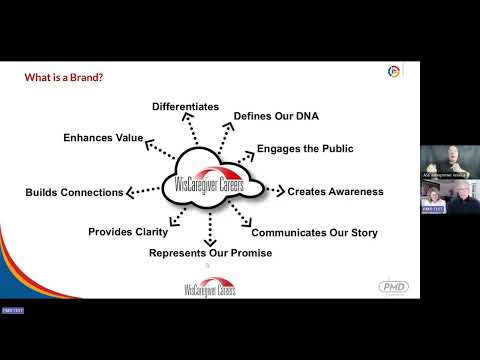
The presenters said WIS Caregiver Careers began in Wisconsin in 2018, first targeting certified nurse aides and later adding the certified direct care professional (CDCP) pathway. Susan Pugorsch said the campaign’s brand goal is to “address the critical caregiver shortage,” reframe caregiving as a valued profession and use multiple languages to connect with diverse communities.
To reach learners and mid-career jobseekers, the campaign uses a blend of videos, animated spots and testimonial creative that direct viewers to the websites’ call-to-action buttons. One campaign video featured participants saying, “It is a joy to be a caregiver,” reflecting the emphasis on personal stories in the advertising.
The presenters described outreach to educators through a partnership with the Wisconsin Department of Public Instruction to embed CDCP certification into high-school health science curricula and independent-study paths. Under the model described, students could begin certification in high school (in some cases as young as 16), receive free training and qualify for the $500 trainee bonus; educators who refer students that complete certification receive a $250 award that goes to the teacher’s school.
Pogorsch described the campaign’s media mix as intentionally broad: broadcast television and radio for statewide reach, print for small and culturally specific communities, and digital tactics such as social media, geofencing and streaming pre-roll to target specific demographics. The presenters said print ads include QR codes while digital placements link directly to registration pages.
On accessibility, the recording included an on-screen ASL interpreter and presenters said translations were done by professional translators rather than automated tools. The campaign also maintains a smaller Hmong-language site and a full Spanish-language site, and provides some downloadable materials for family members who influence students’ career decisions.
On outcomes, Pogorsch reported that, as of late 2025, the campaign’s websites had drawn more than 353,000 users and generated over 18,000 CDCP registrants, yielding an estimated conversion rate of about 5.22%. He said nearly 2 million site events (clicks and interactions) showed active user engagement and that analytics were used to optimize targeting and creative choices.
The presenters said the University of Wisconsin–Green Bay is the campaign’s educational partner, responsible for delivering training, testing, certification and registry services once registrants enroll. Pogorsch described a phased launch strategy—an initial soft launch for operational testing followed by a full-scale hard launch supported by coordinated public relations—and stressed continual measurement and optimization.
The recording and related resources will be posted on the Direct Care Workforce Strategy Center microsite; technical or content questions were routed to the center’s contact addresses provided at the end of the lab talk.