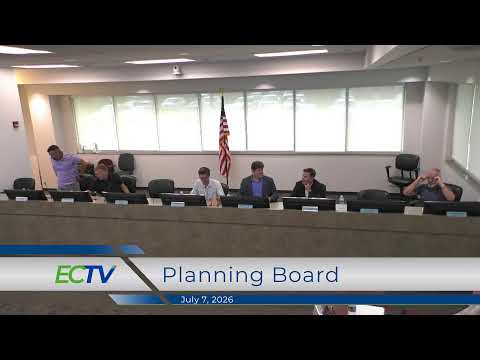
Planning board recommends OLF‑8 map and code changes; opponents warn warehouses and data‑center language will undercut DPZ master plan
Summary
By 4–1 the board recommended an OLF‑8 future‑land‑use and code package intended to make the Outlying Fields master plan buildable and marketable. Opponents said the changes weaken the DPZ design code, would allow warehouse/distribution or data‑center uses, and risk transferring infrastructure costs to taxpayers.
The Escambia County Planning Board on July 7 recommended transmitting a site‑specific future land‑use change and supporting code and master‑plan documents for the Outlying Fields (OLF‑8) property — a large county‑owned tract along West 9 Mile and Frank Reeder roads — that the applicant and developer say reorganizes DPZ’s original master plan into a more buildable, market‑responsive set of regulating rules.
Consultant Melissa Hadley (Goodwyn Mills & Cawood) and developer representative Chad Henderson presented a revised master plan and a single, site‑specific mixed‑use urban future‑land‑use text (MUU‑OLF‑8) intended to preserve town‑center goals while reallocating some uses to locations more compatible with adjacent neighborhoods. Hadley emphasized changes to regulating‑plan districts, road and block structure, and an expanded land‑use table to ensure market‑feasible uses and standard industry dimensions.
The applicant said the project preserves open space, proposes a central town square and a 10‑acre stormwater lake, and aims for a mix of residential, commercial, civic and employment/technology districts. "We've kept the same goals. We still want to be mixed use. We still want to have that town center," Hadley said.
Many residents, civic groups and some board members reacted strongly. Opponents said notice and outreach were inadequate and that the two‑item approach (map change followed by a text/code change) obscured the net effect: removing a commercial‑first requirement in parts of OLF‑8, adding flexible MUU language, and inserting new use‑definitions that critics say could enable warehousing, distribution and data‑center operations. "These amendments are total betrayal of public trust," said Francesca DeBryant, a candidate for the state legislature. Pepper Wimmer and others said the change could allow residential conversion at scale and break the DPZ town‑center promise.
Staff and applicants responded that the proposed MUU‑OLF‑8 language was site‑specific and included mixing ratios intended to bind development patterns so the site delivers a town center, jobs and public space. They also stressed that certain uses remain prohibited unless explicitly allowed in the new code and that detailed traffic, wetlands and utility studies will be required as projects propose specific buildings.
After deliberation the board voted 4–1 to recommend approval of the map and the related text amendments for transmittal to the Board of County Commissioners and, if the commission transmits, to the state agencies for interagency comment. That transmittal will be followed by a state ORC (objections, recommendations and comments) process and a later adoption hearing; the planning board action does not itself change zoning or authorize development.
Opponents signaled they will press the county commission to delay or modify transmittal and to require explicit, enforceable limits on distribution/warehouse or data‑center uses and on infrastructure commitments before the county grants final approvals.
AI generated
The text on this page is AI generated. Summaries, highlights, analysis, and video transcripts are all produced from the original source material.
AI can make mistakes, so if you spot one, and we will fix it for everyone.
Note: the source content is unaltered by us. Any content source we link to, be it a video, an audio recording, or a document, is presented exactly as its publisher released it. That publisher is usually a government body, sometimes an individual official or another organisation.