Get Full Government Meeting Transcripts, Videos, & Alerts Forever!
Get email alerts on the Emergency Communications topic
No spam. Unsubscribe anytime.
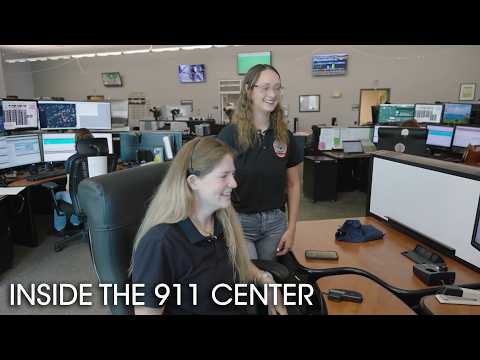
Roanoke County PIO tours emergency communications center, explains how 911 calls are handled
Summary
Roanoke County's public information officer toured the county's Emergency Communication Center to demonstrate how 911 calls are logged in the CAD system, triaged in a narrative entry, and dispatched to units; staff described training, the Active911 alert app and 12-hour shift operations.
The public information officer for Roanoke County Fire and Rescue visited the Roanoke County Emergency Communication Center on July 13 to show how 911 calls are received, recorded and dispatched.
The officer said the county uses a computer-aided dispatch (CAD) system that contains commonly used place names to locate callers and that dispatchers type callers' reports verbatim into a narrative field. "Active flames and smoke," the staff member said as an example of a narrative entry used to trigger fire response.
A staff member at the center described the hub as the county's 24/7 intake point for emergency calls and explained several operational details: the center is staffed around the clock across multiple shifts; dispatchers often juggle multiple screens and must type quickly; and for fire calls the system "tones twice" to alert fire units. "We are staffed 24 7 with 4 different shifts, and we are here to make sure that we keep the community safe," the staff member said.
The demonstration included a walkthrough of the CAD workflow and a live-style example of a dispatch announcement, with unit call signs, the assigned companies, street address, cross streets and the time and tactical channel used to coordinate responses. The PIO read the sample dispatch aloud to show what crews hear when dispatched.
The PIO described using the Active911 mobile alert app to receive incoming call information on a device so responders can see an address and a short incident summary en route. "Every time we get a call, it will come through on my app," the officer said, noting the app helps them respond more quickly to working structure fires.
Staff also described training practices: a nonproduction training server lets trainees practice without affecting live operations, weekly training modules, and specialized emergency medical dispatch (EMD) guide cards that give scripted questions and pre-arrival medical instructions, including guidance for motor vehicle accidents. The staff member said the center operates on 12-hour shifts and described the typical turnover schedule at 07:00.
The tour aimed to clarify how public information officers, dispatchers and field crews get and use the same incident details from the CAD system and associated tools. No policy changes or formal decisions were announced during the visit; the session was a staff demonstration and information briefing.