Get Full Government Meeting Transcripts, Videos, & Alerts Forever!
Get email alerts on the Parkrose Esd topic
No spam. Unsubscribe anytime.
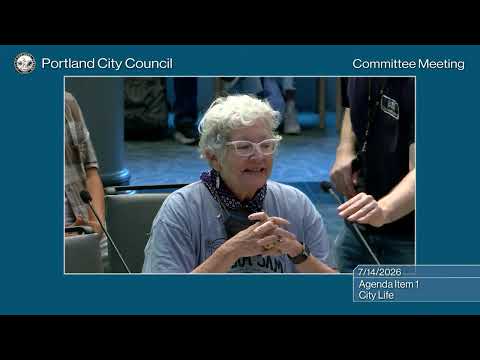
Parkrose Forward ESD proposal draws sharp split at committee hearing; items held over
Summary
A proposed Parkrose Forward enhanced service district (ESD) with an estimated annual budget of about $644,000 prompted extensive public testimony both for and against. After hearing presentations and more than two dozen speakers, the committee agreed to hold the ordinances for further review rather than forward them to council today.
The City Life Committee heard a joint presentation on two ordinances that would establish the Parkrose Forward Enhanced Service District (ESD) and authorize Historic Parkrose to manage its services. Proponents said the district would pay for cleaning, outreach, safety ambassadors (non-armed), business grants and district advocacy; opponents said the mandatory property assessments act like a tax that would unfairly burden small owners and tenants.
Council President Jamie Dunphy (District 1) said Parkrose has suffered long-term service shortfalls and urged the committee to let the proposal proceed through the city’s ESD process so the community could try the tool. "This ESD could potentially alleviate some of the burden... so that there can they can be there when it matters and when seconds count," Dunphy said.
Historic Parkrose executive director Hector Martinez described a year of outreach and a budget proposal of about $644,000. Martinez said work groups, mailers, door‑to‑door outreach and pilots produced measurable improvements in cleanliness and that the proposed programs were shaped by a SWOT analysis and ratified by a leadership group. He emphasized the district’s intent to coordinate with police and the district attorney’s office while avoiding armed security.
Revenue staff outlined the assessment formula: assessors will calculate a per-property annual fee by taking the square root of parcel land area multiplied by $8 plus the square root of building area multiplied by $20, subject to annual CPI adjustment (2.5% floor, 6.5% cap). Owner-occupied single-family houses are exempt; owner-occupied units in duplexes/triplexes/fourplexes were proposed as exempt; apartment buildings would face a per-unit cap of $150 per year (or $35 per unit for affordable housing), staff said.
Public testimony ran more than two hours and showed a sharp divide. Opponents — including property managers, the Protect Parkrose coalition and several long-time small-property owners — argued the measure would impose a mandatory charge that many could not afford and warned that large out-of-area owners could wield disproportionate influence. "It is called a fee, but it's mandatory... That's a tax in every practical sense," said a property owner who identified himself in testimony.
Supporters — including local businesses, neighborhood volunteers and social-service providers — said pilot cleanup efforts reduced encampments and litter and argued that pooled, local funding would produce economies of scale and steady services the city has not provided. Cultivate Initiatives staff and program participants described outreach and re‑engagement work and reported measurable trash removal during pilots.
City staff acknowledged gaps in outreach and data noted by opponents (for example, that many online survey respondents were outside the proposed boundary) and told the committee they had sent two rounds of mailers to roughly 272 addresses within the boundary and held public meetings; staff said the online survey was open more than 60 days and recorded less than 5% opposition among survey participants but that staff did not have a complete breakdown at the hearing.
After the testimony, Chair Pertel Guinee announced the committee would hold items 4 and 5 over to allow additional work with proponents and opponents and to return at a future City Life Committee meeting. The decision preserves committee review and gives staff and the leadership group time to address outreach, equity and representation questions.
Next steps: staff and the Parkrose leadership group will coordinate follow-up outreach and data clarifications before the committee takes a final recommendation to council.