Reassessment will redistribute tax burdens; equalization rate at 57% explains effect
Summary
Consultants said redistribution typically results in roughly one‑third of owners facing higher bills, one‑third similar, and one‑third lower; Kazar reported the town's current equalization rate is 57%, meaning assessed values currently average 57% of market.
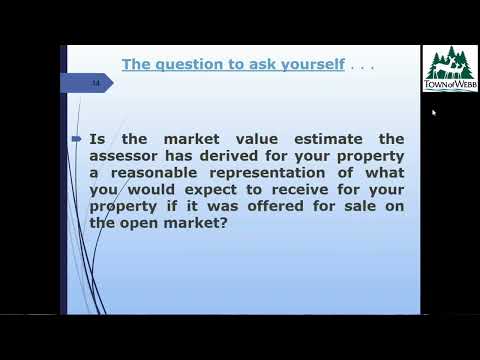
Kazar told residents a reassessment redistributes who pays within the existing levy and does not by itself raise the total taxes to be collected. "A third of the people may have higher tax bills. A third are going to reasonably close to the same and a third may go down," he said, stressing outcomes depend on location, improvements and comparable sales.
He added the town's current equalization rate is 57%, meaning assessed values currently represent about 57% of market value. "If every property went up 43%...the tax rate would drop 43% and everybody would pay the same amount of taxes," Kazar said, explaining the arithmetic of reaching 100% of market value through reassessment does not change the overall levy but can lower the nominal tax rate.
AI generated
The text on this page is AI generated. Summaries, highlights, analysis, and video transcripts are all produced from the original source material.
AI can make mistakes, so if you spot one, and we will fix it for everyone.
Note: the source content is unaltered by us. Any content source we link to, be it a video, an audio recording, or a document, is presented exactly as its publisher released it. That publisher is usually a government body, sometimes an individual official or another organisation.