Get email alerts on the Surveillance topic
No spam. Unsubscribe anytime.
Resident Urges West Fork to Reconsider ALPR Contracts, Citing Privacy Risks
Summary
A resident urged West Fork to follow nearby cities in rolling back ALPR (automatic license-plate reader) contracts, warning the systems can capture faces and movements and create persistent databases.
A resident asked the council to consider withdrawing from or declining automated license-plate-recognition (ALPR) systems after nearby communities canceled contracts with a major vendor.
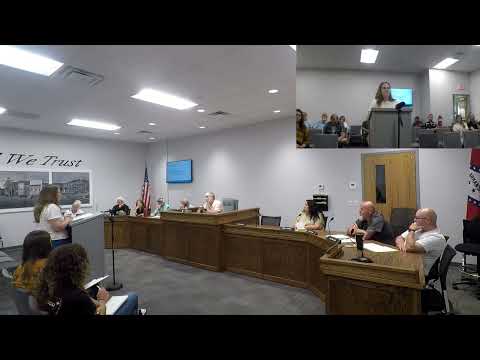
"My hope is that Westfor uh would follow suit," said Andrew Rendall, who cited nearby rollbacks and said ALPR systems can capture far more than license plates — "they have the capability of also reading is people's faces. Uh, how they walk. Uh, the fact they might unknowingly have a tail light out or where they go and when." He added that data retention and access concerns make ALPR a privacy risk.
Rendall said the systems' capabilities and database access make it easier for surveillance to expand over time and urged the city to act preemptively rather than waiting until public privacy is harder to reclaim. Council members listened but did not announce any immediate action; the comment was taken as part of the public forum.
Why it matters
ALPR systems are used by some police departments to locate stolen vehicles and support investigations, but residents and advocacy groups have raised concerns about data retention, secondary uses and the potential for biometric inferences. Rendall pointed to recent decisions by nearby jurisdictions to roll back or cancel vendor contracts as examples for West Fork to consider.
What comes next
No formal staff recommendation or council action on ALPR was introduced at the meeting. The comment was recorded during the public-forum portion of the August council meeting.
AI generated
The text on this page is AI generated. Summaries, highlights, analysis, and video transcripts are all produced from the original source material.
AI can make mistakes, so if you spot one, and we will fix it for everyone.
Note: the source content is unaltered by us. Any content source we link to, be it a video, an audio recording, or a document, is presented exactly as its publisher released it. That publisher is usually a government body, sometimes an individual official or another organisation.