Get email alerts on the Pumas Definition topic
No spam. Unsubscribe anytime.
PUMAs explained: how Public Use Microdata Areas fill gaps in state maps
Summary
Public Use Microdata Areas (PUMAs) are non‑overlapping statistical geographies of about 100,000 people that the Census Bureau uses to ensure sub‑state coverage and inclusion in American Community Survey 1‑year estimates, enabling more current, comparable local analysis.
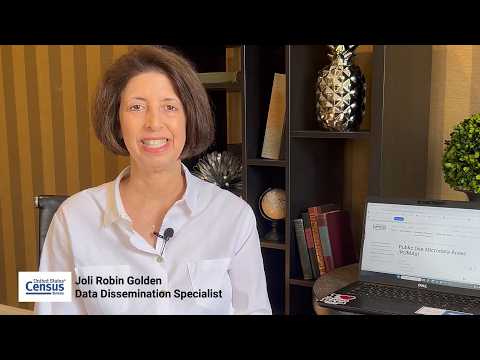
Jolie Golden, a data dissemination specialist at the U.S. Census Bureau, opens the video by explaining why PUMAs offer reliable sub‑state coverage.
"Public use microdata areas, also called PUMAs, are non overlapping statistical geographies that contain at least 100,000 people," the presenter says, noting PUMA boundaries are updated after each decennial census. She adds that because PUMAs meet ACS population rules "they are always included in American Community Survey 1 year estimates, which means the data is very up to date." The explanation frames PUMAs as a compromise between county and tract geographies that preserves comparability across a state.
The presenter highlights three practical properties that make PUMAs useful: minimum population thresholds (about 100,000), regular boundary updates tied to the decennial census, and inclusion in ACS 1‑year releases. Together these features let analysts compare areas with roughly equal population and create special estimates using household microdata not available in pre‑tabulated tables.
Census staff recommend PUMAs when county or smaller geographies produce gaps or unstable estimates on maps; they also point users toward PUMS files for custom tabulations when pre‑formatted tables do not contain the needed variable combinations.
AI generated
The text on this page is AI generated. Summaries, highlights, analysis, and video transcripts are all produced from the original source material.
AI can make mistakes, so if you spot one, and we will fix it for everyone.
Note: the source content is unaltered by us. Any content source we link to, be it a video, an audio recording, or a document, is presented exactly as its publisher released it. That publisher is usually a government body, sometimes an individual official or another organisation.