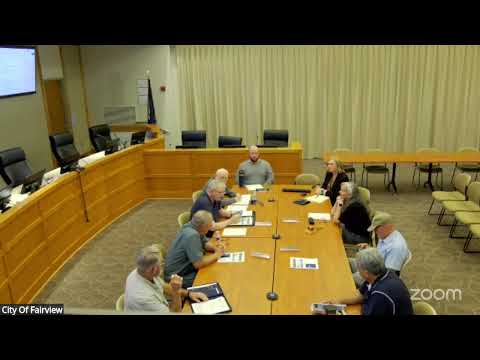
Commission hears how temporary state provisions could ease project barriers through 2032
Summary
Staff and the HAPO presenter summarized temporary statutes that allow qualifying housing projects to request land-use flexibilities; Sean Edging said the near-term provisions (for example, housing land-use adjustments) are temporary and include sunset dates.
During the presentation, Edging highlighted two temporary measures the legislature adopted to reduce near-term barriers to housing production. He explained the housing land-use adjustment provision in SB 1537 lets qualifying projects request specific flexibilities (for example for setbacks or parking) and said the policy "is something that's going to be in place until, I believe, 2032 is when it expires." He gave an example of an Astoria affordable housing project that used the flexibility to avoid an underground-parking requirement.
Edging also described temporary exemptions under SB 974 for certain residential design standards affecting projects of 20 or more units and noted practical questions about eligibility and counting units that HAPO is trying to clarify in a model code. Commissioners asked for examples and clarification on how these temporary rules might interact with Fairview code updates; staff said temporary measures could be applied directly to applications or cities can adopt model-code language by reference.
AI generated
The text on this page is AI generated. Summaries, highlights, analysis, and video transcripts are all produced from the original source material.
AI can make mistakes, so if you spot one, and we will fix it for everyone.
Note: the source content is unaltered by us. Any content source we link to, be it a video, an audio recording, or a document, is presented exactly as its publisher released it. That publisher is usually a government body, sometimes an individual official or another organisation.