Get email alerts on the Classification Compensation topic
No spam. Unsubscribe anytime.
Consultant outlines ongoing classification and compensation maintenance plan for Cook County
Summary
DDA consultant Tessa Melvin presented the county's ongoing maintenance approach to classification and compensation: annual market analyses, rotating job‑description reviews, pay‑equity compliance and benchmark-driven pay philosophy to aid recruitment and retention.
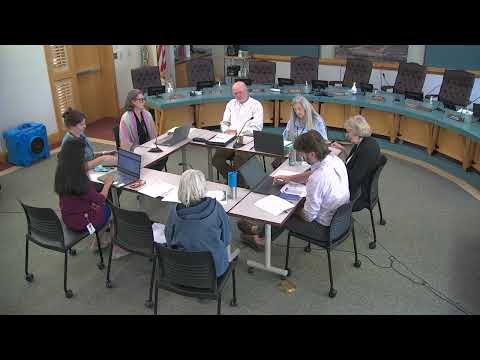
DDA consultant Tessa Melvin told the Committee of the Whole that the county is using an ongoing maintenance approach to classification and compensation to maintain pay equity, update job descriptions and track market competitiveness. "Your employees are your greatest asset, but they're also your biggest part of your budget," Melvin said as she summarized the rationale for annual maintenance rather than a large study every several years.
Melvin explained the process: a job-evaluation tool assessing qualifications, decision-making, problem-solving, relationships and effort; a benchmark group selected by measurable indicators (population, expenditures, tourism impact and tax base ratios); and annual market reviews tied to a pay philosophy set by the board. She said DDA works with roughly 62 counties and that around 42 of them use an ongoing maintenance model.
Commissioners discussed implementation details and whether to rerun benchmark selection; DDA offered to run alternate scenarios and to provide a benefits survey for employees. The board was informed that a DDA contract amendment will be presented at an upcoming full-board meeting.
AI generated
The text on this page is AI generated. Summaries, highlights, analysis, and video transcripts are all produced from the original source material.
AI can make mistakes, so if you spot one, and we will fix it for everyone.
Note: the source content is unaltered by us. Any content source we link to, be it a video, an audio recording, or a document, is presented exactly as its publisher released it. That publisher is usually a government body, sometimes an individual official or another organisation.