Commission proposes shifting inmate-wage split, tables change pending DOC input
Summary
A CLPRC subcommittee recommended changing statutory allocations for inmate work programs to a 30/30/20/20 split and removing 'cost of confinement' from the allocation language; members tabled the change to get Department of Corrections operational input.
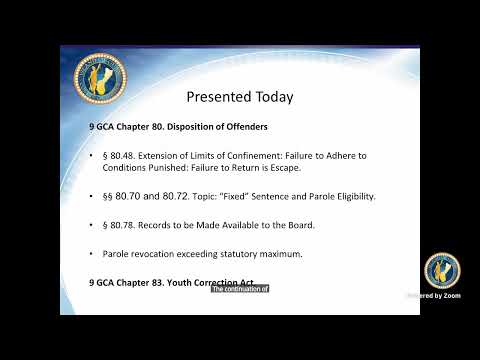
At its Sept. 10 meeting, the Criminal Law and Procedure Review Commission reviewed section 80.48 and a subcommittee recommendation to revise how earnings from inmate work programs are allocated.
Mister Dexter, the commission’s executive director, summarized three statutory work programs and recommended consolidating allocations. He said the ad hoc recommendation would give "30% to the offender's account, 30% to child and or spouse's support, 20% to the criminal injuries compensation fund, and 25 20% to court ordered fines, fees, and restitution." The staff proposal also recommends removing a catch‑all phrase in the statute and replacing it with language tying discretion to the Department of Corrections' authorization.
Members pressed staff on operational details. Commissioners asked what "expenses while incarcerated" would cover and whether family payments must be routed through court orders or could be made on petition. The commission noted that Department of Corrections rules previously shared with staff allow the corrections director to withhold a portion of earnings (staff reported a withholding range of roughly 10–25%), and that DOC operational policies — including whether an inmate account allows withdrawals to pay family — must inform statutory language.
Because of those practical questions, the commission tabled changes to 80.48 and directed staff to return with DOC rules and clarifications about how work‑release accounts operate and how family payments would be implemented.
AI generated
The text on this page is AI generated. Summaries, highlights, analysis, and video transcripts are all produced from the original source material.
AI can make mistakes, so if you spot one, and we will fix it for everyone.
Note: the source content is unaltered by us. Any content source we link to, be it a video, an audio recording, or a document, is presented exactly as its publisher released it. That publisher is usually a government body, sometimes an individual official or another organisation.